Skip to content
  • About
    • About Tandem Global
      • Mission, Vision, Values
      • Our Brand
      • Our People
      • Careers
      • Contact
    • Our Network
      • Meet Our Members
      • Member Spotlights
      • Become a Member
      • Sponsorships
  • Work with Us
    • Consulting Services
      • We connect leading thinking with practical solutions that positively impact climate, nature, and water.
    • Certification
      • About Certification
      • Awards and Recognition
      • Executive Advisory Committee
      • Official Signage
      • Log-In or Register
      • Support Center
    • Social Impact
      • Programs that revitalize ecosystems, strengthen green spaces, and foster economic opportunities.
    • Thought Leadership
      • Cutting-edge events and content
  • Learn More
    • News & Insights
      • From the CEO
      • Blog
      • Industry News
      • Press
    • Resources
      • White Papers
      • Index of WHC-Certified Programs
      • Reports and Toolkits
      • Project Guidances
    • Events
      • Tandem Global Conference 2026
      • Webinars
      • Executive Meetings
      • Elevate Network
  • Certification Login
  • Become a Member
  • Click to open the search input field Click to open the search input field Search
  • Menu Menu
  • About
    • Who We Are
      • Mission, Vision, Values
      • Our Brand
      • Our People
      • Careers
      • Contact
    • Our Network
      • Meet Our Members
      • Member Spotlight
      • Become a Member
      • Sponsorships
  • Work with Us
    • Consulting Services
    • Certification
      • About Certification
      • Awards and Recognition
      • Executive Advisory Committee
      • Official Signage
      • Log-In or Register
      • Certification Support Center
    • Social Impact
    • Thought Leadership
  • Learn More
    • News & Insights
      • From the CEO
      • Blog
      • Industry News
      • Press
    • Resources
      • White Papers
      • WHC Index
      • Reports and Toolkits
      • Project Guidances
    • Events
      • Tandem Global Conference 2026
      • Webinars
      • Executive Thought Leadership Events
      • Elevate Network
  • Certification Login
  • Become a Member

Bayer | Restoring the Atlantic Forest in Brazil

March 25, 2020/by Ivan Gospodinov

The Atlantic Forest in South America extends along the eastern coast of Brazil and down into northern Argentina, Paraguay and Uruguay. It is widely considered one of the most threatened biomes on the planet, and one of the highest priorities for conservation due to intense pressures of habitat loss and degradation combined with extraordinary biodiversity and endemic species.

To address this critical problem, in 2008, Bayer assembled a team in the heavily industrialized, east coast city of Camaçari in Bahia, Brazil. The Camaçari Industrial Complex  is a production facility for agricultural products, home to Bayer and a number of other companies’ industrial facilities, including Kordsa Brasil and BASF. The team at Bayer designed a project called Projeto Florescer, meaning “Project Blossom” in Portuguese, to restore two large parts of the forest that wildlife rely on for food, shelter and resources.

The initial activities of the Bayer team included the planting a living fence of native plant, Sansão do campo, a shrub native to the Cerrado (Brazilian savanna), to keep cattle out of the restoration area. Together with community organizations and local schools, Bayer has planted 20 acres of trees using 25,000 native tree seedlings grown in an on-site greenhouse.

In order to link Projecto Florescer to a broader regional restoration initiative, the team formalized a partnership with Instituto Corredor Ecológico Costa dos Coqueiros (Coconut Coast Ecological Corridor Institute), a non-profit organization dedicated to promoting reforestation along the northern coast of Bahia. Some of the seedlings grown at the Camaçari Plant are used to reforest eroding river and stream banks in neighboring communities. By increasing tree cover and restoring riparian habitat in Camaçari and other cities in Bahia, Bayer is helping to enhance the safety and sustainability of these communities, making tangible contributions to climate, biodiversity and people.

Bayer also educates community members about the Atlantic Forest ecosystem through events like employee family days, open houses and school tours, where visitors can learn about Projecto Florescer and plant tree seedlings in the restored forest.

In 2010, Bayer created an educational project that provides opportunities for approximately 40 students each year to learn about seedling production, reforestation practices, and how to plant and maintain native flora through presentations and hands-on lessons using the site’s nursery garden and other areas. In 2018, this project received the WHC Award for Awareness and Community Engagement.

Related Content

WHC White Papers:

  • Nature-Based Employee Engagement
  • The Critical Role of the Private Sector in Species Recovery and Protection
  • Corporate Citizenship and STEM Education
  • Enhancing Habitat Connectivity Through Corporate Conservation

President’s Blog or Wildlife Blog posts:

  • The Importance of Mainstreaming Biodiversity
  • Guest Blog: Making the Case for Investing in Trees
  • Habitat Design that Invites Exploration
  • Back to School: Partnering with Local Schools to Strengthen Your Certification Program

Project Guidances:

  • Forest Project Guidance
  • Awareness and Community Engagement Guidance
  • Formal Learning Project Guidance

WHC Webinars:

  • How to Select the Best Lessons for Your Education Projects
  • The Three “E’s” to Success: Employees, Education and Engagement
  • Building a Successful Conservation Program: A Toolkit

[factbox]

https://tandemglobal.org/wp-content/uploads/2020/03/Bayer-Camcari-scaled-1-e1690997094793.jpg 500 800 Ivan Gospodinov https://tandemglobal.org/wp-content/uploads/2025/02/tandem-global-logo-exp.svg Ivan Gospodinov2020-03-25 18:38:102023-08-30 09:58:30Bayer | Restoring the Atlantic Forest in Brazil

Covia | Restoring the Forest in Southeast Mexico

October 3, 2019/by Ivan Gospodinov

As a leading provider of mineral-based material solutions with approximately 50 million tons of capacity in the US, Canada, and Mexico, Covia—like any mining company—impacts the land they mine. But Covia is committed to restoring disturbed land and conducting mining practices with respect and care for local species and ecosystems during mining operations and post-closure.

One example of this commitment is the certified program at Covia’s Planta Jáltipan in Veracruz, which encompasses nearly 68 acres of reclaimed land in southeast Mexico.

In 2007, Covia partnered with biologists and forestry experts at the Institute of Ecology (INECOL) and adopted a strategic reforestation plan to preserve and restore the habitat. As part of the plan, the team constructed a greenhouse to protect tree seedlings. Inside the greenhouse they grow over fifty different species including wildlife-friendly soursop, savannah oak, and Mexican cedar. The team also creates compost from fallen leaves gathered on the site, and converts cow waste into fertilizer. The greenhouse has produced 8,000 plants to date, and the team has reforested eight acres of the site. This project is part of a larger corporate commitment to conservation and meets the Mexican government’s requirements for reforestation. In 2014, COVIA expanded the area by over 50 acres after converting a former silica sand mind back into wildlife habitat

As part of its reforestation plan, the team at Covia also manages two plant nurseries to cultivate 13 priority native plant species recommended by INECOL, including guava, avocado, and sapodilla.The nurseries produce more than 15,000 plants per year which are planted in the conservation area or donated to local school groups and communities as part of a regional conservation education awareness effort.

Covia also maintains an artificial lagoon, nest boxes and feeders to attract local wildlife to the reforested site, which includes various species of birds and reptiles like iguanas and turtles The team monitors the site’s flora and fauna regularly and conducts formal inventories with support from INECOL.

Education is a vital part of the conservation program at Planta Jáltipan. Employees coordinate with local schools to lead field trips to the plant’s reforested area, providing learning opportunities through hands-on, outdoor and nature-based activities. More than 3,500 students and community members visit the site per year.

Jáltipan’s reforestation plan has been recognized by the state and federal government and suggested as a model for similar open-pit mining restoration projects. Furthermore, the survival of trees and shrubs at the site is so high that it exceeds the results obtained by the National Forestry Commission. Jaltipan Planta was also postulated as a serious candidate for the Institute of Ecology’s National Forest Merit Award in 2018.

Related Content

  • White Papers:
    • Transforming Remediation Sites into Corporate Assets
    • Corporate Citizenship and STEM Education
    • The Critical Role of the Private Sector in Species Recovery and Protection
  • Relevant President’s Blog or Wildlife Blog posts
    • Stop Making Conservation Complicated. Just Do It.
    • Guest Blog: Making the Case for Investing in Trees
  • Project Guidances:
    • Forest Project Guidance
    • Mammals Project Guidance
    • Awareness and Community Engagement Guidance
  • Webinars:
    • Assessing the Value and Benefits of Trees: An Intro to i-Tree
    • Incorporating Project Learning Tree into Your Educational Projects
    • Monitoring and Documentation: The Key to Successful Programs
    • The Three “E’s” to Success: Employees, Education and Engagement

[factbox]

https://tandemglobal.org/wp-content/uploads/2019/10/ExtendedForest2.jpg 849 1163 Ivan Gospodinov https://tandemglobal.org/wp-content/uploads/2025/02/tandem-global-logo-exp.svg Ivan Gospodinov2019-10-03 08:10:032023-10-20 13:58:59Covia | Restoring the Forest in Southeast Mexico

Boeing | Bringing the Salmon Back to the Duwamish River in Seattle

August 27, 2019/by Ivan Gospodinov

Salmon are an important source of nutrients for many species, including some endangered species like the southern resident orca. Millions of people rely on salmon as a healthy and reliable source of protein. Salmon presence is also an indicator of healthy aquatic ecosystems. Salmon migration runs push vast amounts of marine nutrients from the oceans to the waters of lower productivity rivers. As salmon disappear, the quality of ecosystems decreases. Seattle is just one example where critical salmon habitats are in decline, but one WHC member is working to change that.

The Boeing Plant 2 facility, located along the banks of the Duwamish River, was once used to manufacture planes before it was decommissioned for waste cleanup. The site now contains five acres of restored intertidal wetlands and riparian habitat, created as part of a federal and state order to restore the site for wildlife. The conservation project on the site includes cleanup efforts like dredging sediment and contaminated bank soils, and demolition of a building that extended over the waterway. Boeing used these cleanup efforts to transform nearly one mile of former industrial waterfront into vital habitat for salmon and other aquatic species.

Starting in 2012, Boeing removed nearly 700 contaminated creosote wood pilings, restored the shoreline, planted thousands of native plants, and added large woody debris, which provide refuge for fish, food for insects, and reduce excessive erosion.  The restoration also created critical off-channel areas where juvenile salmon and other anadromous fish can rest, feed and acclimate to saltwater conditions during their migration from upriver freshwater habitat into the Puget Sound estuary.

Regular monitoring has revealed just how valuable this habitat already is to numerous fish species, particularly salmon. Boeing team member Monica Zimmer remarked that during a recent survey, “We counted over 7,000 Chum salmon and 260 Chinook salmon—a threatened species in Puget Sound—utilizing the embayment in just one tidal cycle!”

Typical of most large-scale conservation projects, there were challenges. Boeing struggled to protect the newly planted vegetation from Canada geese, which graze on young, tender plants and caused several areas to require replanting. The team tried several approaches to discourage the presence of geese with little success, including installing cardboard cutouts and 3-D models of predators. They also tried installing netting to prevent geese from landing, but this caused more problems by trapping debris and causing maintenance issues. The team finally determined that staffing and supervising the area with regular patrols during the geese’s key migratory periods was the best solution until the plants had grown enough that they could withstand occasional grazing.

Since first receiving WHC Conservation Certification® in 2016, the Boeing Plant 2 program has seen a very positive response from the community. Several organizations have participated in walking tours of the habitat, and community members can participate in an annual boat tour. These tours help to highlight Boeing’s habitat restoration work and promote the need for additional restoration projects of a similar nature along the waterway.

Related Content

  • White Papers:
    • The Critical Role of the Private Sector in Species Recovery and Protection
  • Relevant President’s Blog or Wildlife Blog posts
    • 6 Ways to Protect Your Local Watershed
    • Migratory Species are Blind to Borders, But We are Not
    • What’s All the Fuss About Native Plants?
  • Project Guidances:
    • Marine Intertidal
  • Webinars:
    • Blue-Green Infrastructure: Building Resiliency in Corporate Habitats
    • Five Star Grants: A Good Fit for Companies and Their Community Partners
    • 5 Innovative Approaches to Habitat Regeneration
    • Conservation Alignments – How to Make a Difference Beyond Your Site

[factbox]

https://tandemglobal.org/wp-content/uploads/2019/08/Boeing_Plant2_restoredhabitat-e1690997151415.jpg 500 800 Ivan Gospodinov https://tandemglobal.org/wp-content/uploads/2025/02/tandem-global-logo-exp.svg Ivan Gospodinov2019-08-27 13:10:112023-09-01 11:47:17Boeing | Bringing the Salmon Back to the Duwamish River in Seattle

BASF | Preserving and Enhancing Biodiversity for the Community

May 30, 2019/by Ivan Gospodinov

As a member of WHC, BASF has worked to establish wildlife habitat and conservation education initiatives on their lands since 2002. With WHC Conservation Certification programs in the U.S. and Canada, BASF’s commitment to preserve and enhance biodiversity is a priority for the organization as they pledge to conduct business in a manner that is responsive to the environmental and economic needs of the communities in which they operate.

The Gold-Certified conservation program at BASF’s Fighting Island facility exemplifies this pledge, offering unique and innovative learning experiences for local students.

Fighting Island, a 1,500-acre island on the Canadian side of the Detroit River in LaSalle, Ontario, has been transformed into a resource for local schools and community members with  biodiversity restoration projects and educational facilities.

The island was historically used for storage of lime tailings, a byproduct of soda ash production, in settling beds. Since closing the settling beds in 1982, BASF’s efforts have led to native revegetation and reforestation to help prevent erosion, reduce dust, increase wildlife habitat, control runoff, and enhance the island’s appearance.

BASF currently maintains multiple conservation projects on the island, including invasive species control, native tree and shrub plantings, bat houses, pollinator habitat, and native game bird reintroductions.

Since 2004, BASF, in conjunction with Essex County schools, turned the island into an outdoor classroom, providing a hands on learning environment that has hosted more than 30,000 students from the local community.

BASF successfully incorporates the use of advanced technologies with outdoor STEM learning for local students.

The education project at Fighting Island provides local elementary and secondary school students with a classic STEM learning experience in which educational activities are structured around a practical experiment-based approach using the island’s habitats as the basis for cultivating problem-solving and critical thinking skills.

The curriculum used at the site was developed specifically for the facility by the employee volunteer team, Essex County teachers and school administrators, and aligns with Ontario’s academic standards.

Technology is a mainstay of the curriculum and allows students to experience real-world scenarios, much in the way that scientists and researchers do. The island’s four portable classrooms, known as  environmental labs, are equipped with computers, monitoring equipment and microscopes. A high-resolution projection camera streams video from a microscope or specimen dish to the computers, which allows the entire class to view insects, aquatic macroinvertebrates, and other samples gathered in the field. The monitoring equipment includes special devices that can be taken into the rugged field environment.

These devices capture, analyze, annotate, store and print data wirelessly, and connect to a number of
sensors for monitoring pH, dissolved oxygen, conductivity, temperature, weather, water quality, and GPS position in the site’s wetlands and ponds.

A particularly valuable aspect involved with using these devices is that students also make qualitative observations and then compare those to the data gathered with the sensors, enabling them to understand how the methodology and equipment can affect the results of experimentation.

The conservation program at Fighting Island demonstrates how BASF supports the communities in which they live and work, and contribute to a world that provides a viable future with enhanced quality of life for everyone.

Related Content 

  • White Papers:
    • Corporate Citizenship and STEM Education
    • Transforming Remediation Sites Into Conservation Assets
  • Relevant President’s Blog or Wildlife Blog posts
      • A Hands-On Approach to Building the STEM Workforce of Tomorrow
      • Let’s Go Outside! The Benefits of Learning in the Outdoors
      • The Importance of Aligning Your Projects with Learning Standards
      • Hands-On Means Minds-On
      • Habitat Design that Invites Exploration
      • Celebrate World Wetlands Day on February 2
      • Back to School: Partnering with Local Schools to Strengthen Your Certification Program
  • Project Guidances:
    • Formal Learning
    • Landscaping
    • Wetlands
  • WHC Webinars:
    • Five Star Grants: A Good Fit for Companies and Their Community Partners
    • The Three “E”s to Success: Employees, Education and Engagement
    • Measuring the Success of Your Conservation Education Projects
    • Event Planning 101: How to Host a Successful Community Event at Your Habitat
    • Incorporating Project Learning Tree into Your Educational Projects
    • Wetland Habitats: Identification, Monitoring and Use as Outdoor Classrooms
    • Building a Program on Your Remediation Site
    • STEM Learning in Your Habitat
    • Building Effective Partnerships: Case Studies

[factbox]

https://tandemglobal.org/wp-content/uploads/2019/05/WL_great-blue-heron_BASF_web-only-e1690997009695.jpg 500 800 Ivan Gospodinov https://tandemglobal.org/wp-content/uploads/2025/02/tandem-global-logo-exp.svg Ivan Gospodinov2019-05-30 10:11:522023-09-01 11:47:02BASF | Preserving and Enhancing Biodiversity for the Community

Vulcan Materials | Birds Flourish at a North Carolina Quarry

February 22, 2019/by Ivan Gospodinov

A typical quarry site is busy, loud and teeming with workers and vehicles—not exactly ideal for wildlife habitat. But quarries (both active and inactive), with their large parcels of land that can include grasslands and wetlands, can in fact provide a safe and beneficial home to a variety of wildlife.

The Gold Hill Quarry, located on 400 acres in the small community of Gold Hill, North Carolina, might not seem like the typical home for birds, but species like osprey, wood ducks and eastern bluebirds have been flourishing there for decades. The quarry, which is owned and operated by Vulcan Materials, supplies and distributes aggregates like gravel, sand and crushed stone for use in construction. The management of the quarry’s conservation projects is performed by a small but dedicated team of employee volunteers led by Jordan Littauer, District Operations Manager at Vulcan Materials. The Gold Hill Quarry team is primarily focused on supporting avian species that use the site’s ponds and other habitats.

One of those other habitats is a somewhat unlikely one – the top of the stacker conveyer support structure in the processing plant, where a pair of osprey have nested for years.

Although the conveyer moves throughout the day, Littauer chuckled as he explained how the movement is slow enough that the birds “don’t seem bothered by it and just ride it back and forth all day.” Nevertheless, employees make sure to minimize vehicle and noise disturbance in the vicinity when osprey are on-site.  Their nesting activity, such as when they arrive at the nest each year and the nestlings’ behavior, is monitored regularly. Littauer described how much he enjoys watching the birds gathering nesting materials each spring: “They fly around rim of the pit, grab a branch, and keep flying. It’s really neat to watch.” Last year, a second nest was built on top of another nearby support structure; although no young have been observed in the nest, it’s a good sign that a second pair of osprey might begin nesting on-site in the coming year.

While the osprey enjoy their unusual nesting spot, other bird species prefer a more traditional dwelling in the form of nest boxes. Through a partnership with Delta Waterfowl, an organization focused on waterfowl conservation and management, the Vulcan employees gain expertise to assist with maintaining and monitoring the 8 wood duck nest boxes installed around the ponds. There are also 21 boxes for eastern bluebirds dispersed throughout the quarry property, with neighboring agricultural fields supporting the insects bluebirds feed upon in the spring and summer. Several of the facility’s quality control technicians assist with monitoring the boxes, which are too numerous and spread out for the small employee team to monitor on its own.

The program at the Gold Hill Quarry has maintained its WHC certification for an impressive 27 years. Littauer attributes this long-term success to good planning. Each year, the team meticulously schedules the monitoring and maintenance activities for its projects, such as when to clean out and repair nest boxes, when to start monitoring them in the spring, and the best timing for determining how many young hatch and then fledge from the nest boxes.

The employees that manage these habitats are all very passionate about wildlife and environmental conservation and are continually encouraged by a company-wide dedication to biodiversity and the pursuit of WHC Conservation Certification®.

Littauer says that he and his teammates receive the most satisfaction in the value they’re providing to local species, “What we like to see is the results. It gives me the most pride that we’re making a difference.”

Related Content

  • Blogs:
    • Migratory Species are Blind to Borders, But We are Not
    • Celebrate World Wetlands Day on February 2
    • There are Wrens in My Bluebird Boxes!
    • Nest Boxes Can Provide Overwintering Cover
    • Nest Cameras
    • The Kestrel and the Steel Mill – How the Urban Industrial Landscape Can Support Climate, Community and Habitats
  • Webinars:
    • International Migratory Bird Day: Celebrating Birds in Your Habitat
    • We Need a Buffer: Protecting Wetlands by Installing and Monitoring Riparian Buffer Zones
    • Wetland Habitats: Identification, Monitoring and Use as Outdoor Classrooms
  • Project Guidances:
    • Avian
    • Wetlands

[factbox]

https://tandemglobal.org/wp-content/uploads/2019/02/gold-hill-243-e1550869985357-scaled.jpg 1116 2048 Ivan Gospodinov https://tandemglobal.org/wp-content/uploads/2025/02/tandem-global-logo-exp.svg Ivan Gospodinov2019-02-22 16:23:292023-10-26 15:43:31Vulcan Materials | Birds Flourish at a North Carolina Quarry

DuPont | A Forest and Wetlands Species Wonderland in Northern Spain

February 19, 2019/by Ivan Gospodinov

Asturias, a region of northwest Spain atop the Iberian peninsula, is known for its rugged coast, mountains, religious sites and medieval architecture. It is also home to DuPont’s Asturias plant, located in the northern Iberian peninsula in Spain, which encompasses more than 80,000 acres. The region is predominantly deciduous forests, but has lost much of its original native vegetation to agricultural development and the spread of invasive species. It’s not surprising then that one of the main focuses of Asturias’ WHC gold-certified program is forest habitat and restoration.

Originally used as a production facility in the 90s, DuPont Asturias has evolved to become a center for specialty services and corporate finances. Much of the plant’s success is attributable to DuPont community relations efforts. The company sought advice locally before it designed a plant in harmony with its surroundings. Landscapers planted 160,000 trees and shrubs and restored the area’s original habitats, including peat bogs and wetlands.

Since then, the team at Asturias collaborates with government agencies, environmental contractors and other partners to manage the 340 acres of forest habitat on the site. They work tirelessly to monitor the habitat, regularly removing invasive species and replanting native flora. When invasive eucalyptus was discovered during recent annual monitoring, the team removed it from more than 25 acres on the site’s northern perimeter. The area was replanted with 800 native trees, including chestnuts, oaks, birches and cherry trees.

Another focus of the conservation program at Asturias is La Furta. Once lost to agricultural use, La Furta is now a thriving, primarily wetland habitat that has become an essential stop on the migratory route to and from Europe and Africa for many avian species. Designated as one of Spain’s Special Protection Areas for Migratory Birds, academics, ornithological groups and nature photographers regularly visit the site to see the birds that call these wetlands home. In addition, the fields around the healthy wetlands are managed for managed for grazing livestock.

DuPont’s commitment to conservation extends far beyond the borders of the site. With an abundance of bird, butterfly, plant and livestock species on the site, Asturias regularly opens its gates to the community, providing opportunities to view these species and learn about them  throughout the year. From guided tours to large-scale celebrations, DuPont Asturias has hosted thousands of visitors since the inception of its conservation program.

One special day celebrated annually is the World Wetlands Day. Created to “raise global awareness about the vital role of wetlands for people and our planet”, World Wetlands Day is observed on February 2 each year. And each February, DuPont Asturias’ hosts a celebration at its wetlands, welcoming members of the local community, employees and their families to enjoy the site and its wildlife.

The success of the restoration efforts at DuPont Asturias – in terms of both biodiversity and community outreach – is a shining example of the impact corporate conservation can have and highlights DuPont’s continued commitment to manage its lands to enhance habitat for wildlife.

Related Content

  • White Papers
    • Corporate Citizenship and STEM Education
    • The Conservation Connection
  • Relevant President’s Blog or Wildlife Blog Posts:
    • Celebrate World Wetlands Day on February 2
    • Making the Case for Investing in Trees
  • Project Guidances:
    • Avian
    • Awareness and Community Engagement
    • Forest
    • Wetlands
  • WHC Webinars:
    • 5 Innovative Approaches to Habitat Regeneration
    • Assessing the Value and Benefits of Trees: An Intro to i-Tree
    • Conservation and Community Engagement Beyond Your Fenceline
    • Invasive Species: An Introduction
    • Invasive Species: Resources and Techniques
    • The Three “E”s to Success: Employee, Education and Engagement
    • The Vital Role of Business in Biodiversity: Building the Case for Corporate Conservation
    • We Need a Buffer: Protecting Wetlands by Installing and Monitoring Riparian Buffer Zones
    • Wetland Habitats: Identification, Monitoring and Use as Outdoor Classrooms

[factbox]

https://tandemglobal.org/wp-content/uploads/2019/02/WL_bird_kingfisher_DuPont.jpg 683 1024 Ivan Gospodinov https://tandemglobal.org/wp-content/uploads/2025/02/tandem-global-logo-exp.svg Ivan Gospodinov2019-02-19 20:28:052023-10-20 14:03:10DuPont | A Forest and Wetlands Species Wonderland in Northern Spain

Atlantic Richfield | A 20-year Passion for Montana’s Wildlife Benefits Employees and Community

July 27, 2018/by Ivan Gospodinov

Encompassing 2,500 acres in western Montana, Atlantic Richfield Company’s Warm Springs Ponds program gets its name from the Warm Springs Ponds, a series of connected ponds built in the first half of the 20th century to provide water treatment for mine tailings and smelting waste in Silver Bow Creek. The largest of these ponds is 640 acres in size. The company’s mining activity has since ceased and the site now has an interim remedy for impacts of the historic mining activity that includes a pond water treatment system designed and operated to be compatible with a thriving fish and wildlife habitat.

Today, Warm Springs Pond is a Montana Department of Fish, Wildlife, and Parks (MFWP) wildlife and recreation management area and is open to the public for activities such as bird watching, hunting, fishing, hiking and biking. Management of the site is a partnership between Atlantic Richfield (a subsidiary of BP America Inc.)  and MDFWP, which handles the more technical aspects of monitoring and maintenance, allowing employees to participate in activities such as planning, site tours, fly fishing camps and bird counts, while still ensuring that management activities are correctly implemented.

The Warm Springs Ponds provide an important stopover habitat for migratory waterfowl along the Central Flyway.

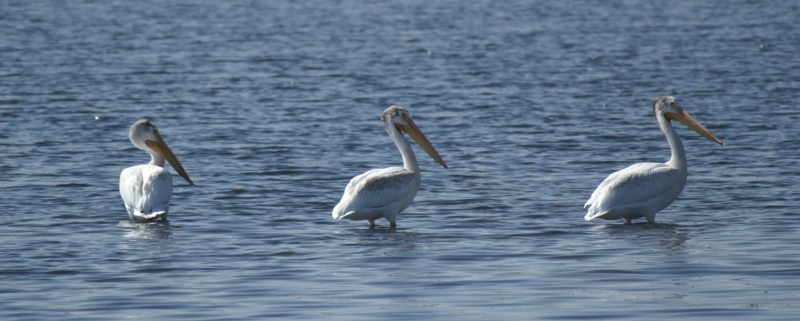
Although initially designed for water treatment, the ponds also provide an invaluable ecological community for mammals, fish and birds. The site provides a significant stopover habitat for a wide variety of migratory birds, including eagles, herons, raptors, grebes, gulls, ducks, and loons. Partners such as GoBird Montana and the MFWP have documented over 200 bird species during semi-annual bird counts and Audubon’s annual Christmas Bird Count.

Over the years, a number of structures have been installed and maintained around the site to benefit wildlife, including bat houses, osprey nesting platforms, and wildlife-friendly fencing. MDFWP also stocks the ponds with game fish such as brown and rainbow trout to encourage recreational fishing and healthy fish populations.

Local educators are encouraged to use the Warm Springs Ponds as an outdoor classroom where students can learn about the region’s wildlife and their habitats, the form and function of wetlands and other habitats, local history and how Atlantic Richfield uses the wetlands as a water treatment system. Team members often provide site tours to local school classes, with the activities and information conveyed tailored to the needs of each group. Students and professors from the University of Montana also visit the site yearly as part of an ongoing ecotoxicology study of osprey nests throughout the site.

The program at Warm Spring Ponds has been WHC-certified since 1998. Jenni Harris, Atlantic Richfield’s  team leader for the program, emphasized the value of the program’s endurance, “The fact that our site has been certified for 20 years shows our commitment to providing a recreational asset and a haven for wildlife that the local community can enjoy.”

Harris attributes the program’s longevity to the long-standing partnership with MFWP, as well as employees’ enthusiasm for Montana’s wildlife and the outdoors. In fact, employees enjoy sharing stories about the recreational fishing on-site, like a visitor catching a big 10-pound trout. Employees have also been known to excitedly talk about the ducklings and other young birds observed each spring. This passion for local biodiversity is a strong motivator for the team’s efforts; as Harris described, “We continually strive to maintain or optimize what this site has to offer.”

Related Content

  • Blogs
    • Partnerships and Technology: Keys to Success for Warm Springs Ponds Program
    • Hands-On Means Minds-On
    • Habitat Design that Invites Exploration
    • Migratory Species are Blind to Borders, But We are Not
    • The Christmas Bird Count Tradition and How It Can Work for Your WHC Program
    • Celebrate World Wetlands Day on February 2
    • Back to School: Partnering with Local Schools to Strengthen Your Certification Program
  • Webinars:
    • Wetland Habitats: Identification, Monitoring and Use as Outdoor Classrooms
    • We Need a Buffer: Protecting Wetlands by Installing and Monitoring Riparian Buffer Zones
    • Building a Program on Your Remediation Site
    • International Migratory Bird Day: Celebrating Birds in Your Habitat
    • Measuring the Success of Your Conservation Education Projects
    • Building Effective Partnerships: Case Studies
  • Project Guidances:
    • Avian
    • Wetlands
    • Awareness and Engagement
  • White Papers:
    • Transforming Remediation Sites Into Conservation Assets

[factbox]

Read more Corporate Conservation Success Stories

https://tandemglobal.org/wp-content/uploads/2018/07/WL_pelicans_BP-Warm-Springs-Ponds-scaled-e1753918064387.jpg 500 800 Ivan Gospodinov https://tandemglobal.org/wp-content/uploads/2025/02/tandem-global-logo-exp.svg Ivan Gospodinov2018-07-27 06:32:492025-07-30 19:27:54Atlantic Richfield | A 20-year Passion for Montana’s Wildlife Benefits Employees and Community

Energía DTE | Un Oasis Urbano en Detroit para la Comunidad y Fauna

April 19, 2018/by Ivan Gospodinov

En la zona industrial de Detroit existe una planta de energía, entre los ríos Rouge y ríos Detroit. Difícilmente el lugar indicado para aventurarse, Energía DTE ha logrado crear un oasis urbano en la planta de 105 River Rouge.

El equipo priorizó la incorporación de hábitat donde sea posible en la propiedad, reemplazando cada centímetro cuadrado de césped con vegetación nativa amigable con la vida silvestre y creando un área natural de 5 acres, reutilizando un campo segado sin usar. Aquí, los empleados y visitantes pueden disfrutar y aprender sobre las abundantes plantaciones de árboles, el hábitat de la pradera, sus estanques y senderos.

Mucho cuidado se tuvo con la atención del paisaje y especies ya que se debía garantizar que fueran nativas de la región y beneficiosas para la vida silvestre existente, Kirsten LeForce, coordinadora de programas de conservación de Energía DTE nos informa. Las plantaciones de árboles, hierbas y flores incluyen una variedad de especies que proveen alimento a las aves migratorias, que se detienen en el sitio en grandes cantidades cada primavera y otoño. El área de la naturaleza también presenta un hibernáculo de serpiente que proporciona un hábitat de cobertura para las serpientes del zorro oriental amenazadas por el estado de Michigan.

Desde el principio, el área de la naturaleza estaba destinada a ser disfrutada no solo por los empleados, sino también por la comunidad. El River Rouge PowerPlant organiza eventos varias veces al año, invitando a escuelas primarias locales y otros grupos comunitarios a participar en caminatas por la naturaleza a lo largo de los senderos, plantación de árboles, eliminación de especies invasivas, muestras de estanques y presentaciones educativas sobre los animales de Michigan.

Otra prioridad era la costa del sitio, ya que el área necesitaba urgentemente ser restaurada. En un esfuerzo por atraer a las aves y peces nativos, el equipo recibió una otorgación de restauración Five Star en 2010 para implementar ingeniería a lo largo de la orilla del río Rouge. Esta área fue restaurada con éxito y ahora proporciona un valioso hábitat para las garzas y los peces, y la vegetación nativa evita que la costa se erosione más. El equipo también intentó crear un hábitat de anidamiento para charranes amenazados por el estado a lo largo de la costa. Sin embargo, a pesar de trabajar con varios expertos y utilizar tácticas para atraer golondrinas de mar, estas aves aún no han anidado con éxito en el sitio. Jason Cousino, el Coordinador de Hábitat de Vida Silvestre de la instalación de River Rouge, señaló que no importa cuánto tiempo, energía y emoción entra en un proyecto, todavía no puede ser exitoso, pero las lecciones importantes se pueden aprender tanto de los fracasos como de los éxitos.

Sobre todo, LeForce comentó que la “pasión de los empleados” es lo que impulsa el éxito continuo del programa. Los empleados de todos los niveles pueden involucrarse con los proyectos que son importantes para ellos, y el equipo recibe una gran cantidad de apoyo de la administración del sitio para implementar y mantener proyectos.

https://tandemglobal.org/wp-content/uploads/2018/01/photo-2-1-scaled.jpg 1536 2048 Ivan Gospodinov https://tandemglobal.org/wp-content/uploads/2025/02/tandem-global-logo-exp.svg Ivan Gospodinov2018-04-19 07:39:212023-10-26 15:13:13Energía DTE | Un Oasis Urbano en Detroit para la Comunidad y Fauna

WIN Waste | Hogares para las Aves Migratorias

March 8, 2018/by Ivan Gospodinov

Localizado en una isla en la costa de Massachusetts y rodeada por  13300 acres del área del pantano de la preocupación ambiental crítica, Wheelabrator Saugus Inc y su santuario de la fauna de Bear Creek provee 340 acres del hábitat de altiplanicie para las aves migratorias.

“Este programa sirve como modelo para otras operaciones activas y un ejemplo de como un santuario de vida silvestre puede coexistir fácilmente sin conflicto beneficiando la naturaleza y necesidades empresariales.”

Los miembros del equipo Wheelabrator que manejan los hábitats del santuario están enfocados principalmente en proveer un hábitat de calidad para las aves migratorias, particularmente las 24 especies únicas en el área que están sufriendo más por la pérdida de su hábitat. La gestión activa del equipo de los 9 diferentes tipos de hábitats del sitio mantiene las características texturales que usan las aves para identificar el hábitat de alto nivel en el aire durante su viaje migratorio a lo largo de la ruta aérea del Atlántico. Estos esfuerzos han tenido tanto éxito que, a partir de 2016, empleados y voluntarios de la comunidad han documentado 178 especies de aves en el sitio, incluyendo 15 de las 24 especies de aves especializadas y varias especies vagabundas que llegaron por accidente debido a una tormenta. Sin una gestión activa, estas especies de aves no serían atraídas a venir y permanecer en este nuevo hogar.

Junto con las aves migratorias, el equipo también mantiene una serie de otros proyectos para manejar los 9 hábitats de manera integrada, incluyendo el control de varias especies invasoras. Estos esfuerzos comenzaron a mediados de la década de 1990 con la construcción de diversos hábitats de las tierras altas como parte del plan de reutilización posterior al cierre para un vertedero antiguo.

Los esfuerzos de conservación de Wheelabrator no se limitan al santuario. La instalación de Bear Creek también incluye una planta de energía de residuos y un monofill de ceniza. Este programa sirve como un modelo de cómo las operaciones activas y un santuario de vida silvestre pueden coexistir fácilmente sin conflicto y, de hecho, en beneficio tanto de la vida silvestre como de las necesidades empresariales. El equipo atribuye gran parte de su éxito a las reuniones regulares entre las diversas unidades operativas en sitio que se han celebrado desde mediados de los años 90, cuando comenzó la construcción de los hábitats. Colaborar ha ayudado a mejorar la comprensión de las necesidades de cada grupo y superar las limitaciones o conceptos erróneos de varias instalaciones, lo que a su vez ayuda a promover la armonía entre el hábitat y los esfuerzos de gestión de vida silvestre y las operaciones de la instalación. La comunicación frecuente a través de estas reuniones también permite al equipo identificar oportunidades, tales como el potencial de reforestación cuando una parte de la propiedad se vuelva inactiva a largo plazo.

Los voluntarios de la comunidad que visitan el sitio para paseos y recorridos de aves, hacen una contribución significativa a los logros del programa. El grupo principal de observadores de aves que asisten regularmente a los paseos y excursiones proporcionan una gran ayuda en la identificación de aves y la documentación de estas observaciones en eBird.org de la Universidad de Cornell. Los voluntarios también sirven como embajadores no oficiales del programa, compartiendo los logros del programa con otros miembros de la comunidad.

El Bear Creek Wildlife Sanctuary sirve como un modelo ejemplar para cualquier programa que desee equilibrar la gestión del hábitat con las necesidades de su negocio. Al mantener una gestión activa de los hábitats del sitio y trabajar estrechamente con el personal operativo del sitio y un grupo básico de voluntarios de la comunidad, el equipo se asegura de que las aves migratorias puedan continuar encontrando hábitat de calidad en el sitio a largo plazo.

https://tandemglobal.org/wp-content/uploads/2016/03/Wheelabrator-Bear-Creek-e1690995015894.jpg 499 800 Ivan Gospodinov https://tandemglobal.org/wp-content/uploads/2025/02/tandem-global-logo-exp.svg Ivan Gospodinov2018-03-08 17:59:412023-10-26 15:44:59WIN Waste | Hogares para las Aves Migratorias

WM | Los Boy Scouts y Programas de Conservación

March 8, 2018/by Ivan Gospodinov

WM de El Sobrante vertedero y Wildlife Preserve abarca 1,333 hectáreas en la ciudad de Corona, California, a 27 millas del este de Los Ángeles. Este sitio está compuesto por un relleno sanitario y un espacio abierto inalterado, con 700 acres administrados para reserva de hábitat. El equipo trabaja diligentemente para proteger especies en peligro de extincion mediante la implementación del Plan de Conservación de Hábitat (HCP)  que fue desarrollado en el 2001. El HCP cubre 31 especies de preocupación, incluyendo el  canguro de Stephens.

Miriam Cárdenas, Especialista en Relaciones Comunitarias y líder de equipo para el programa de conservación, señaló la popularidad del programa entre los voluntarios de la comunidad. Un grupo de voluntarios especialmente interesados ​​son los Boy Scouts y Girl Scouts locales. A través de esta asociación exitosa, los Scouts han completado una variedad de proyectos de conservación en el sitio, incluyendo aquellos que ayudaron a cumplir con los requisitos de su insignia y al menos 11 proyectos Eagle Scout y Gold Award  que contribuyen a las metas del vertedero para el HCP. El equipo ofrece a los Scouts interesados ​​una lista de proyectos potenciales que serían útiles para cumplir con los objetivos de conservación, permitiendo a los Scouts elegir un proyecto que mejor se adapte a sus intereses y requisitos.

Varios de los proyectos de los Scouts han colaborado con nidificación artificial el cual que ayudan a los Scouts fortalecer sus habilidades STEM a través de actividades como la medición de materiales y el uso de esquemas de diseño para construir las estructuras. Un ejemplo fue cuando los Scouts construyeron 20 madrigueras artificiales para búhos de madriguera, una especie cubierta bajo el HCP que tiene una baja población en el área cercana al sitio. Esta especie anida típicamente en madrigueras abandonadas hechas por otras especies como las ardillas de tierra. Aunque todavía no se ha producido actividad de anidación en las madrigueras, se observó un macho de esta especie observando los nidos, pasando cerca de un mes en dos de ellas. Otras estructuras construidas por los Scouts también las casas de murciélagos.

Los Scouts también han participado en varios proyectos de restauración y protección de hábitats, incluyendo plantaciones de cactus nativos, limpieza de basura de más de 60 acres de vertido ilegal histórico y cierre de senderos ATV ilegales con el uso de rocas, cepillos y plantaciones de cactus nativos para bloquear y disfrazar los senderos. Cuando un Boy Scout quería ayudar rápidamente a las poblaciones de monarcas en declive, el equipo le proporcionó la oportunidad de plantar plantas y semillas de milkweed nativas que han sido utilizadas con éxito por los monarcas. Este proyecto también fue completado recientemente por una tropa local de Girl Scouts. Varios Scouts crearon un afloramiento de roca artificial para ayudar a propagar la rara planta dúdela de muchos tallos, y con la instrucción del equipo del sitio procesaron las vainas de semillas recogidas y las extendieron sobre el afloramiento usando saleros. Estos también ayudaron al equipo a replantar el sicómoro nativo y los árboles de álamo occidental en una zona quemada por incendios forestales en 2007, restaurando árboles importantes que en 2015 se convirtieron en hábitat de anidación para animales silvestres.

El equipo El Sobrante de Gestión de Residuos ha fomentado una asociación exitosa e integrada con los Boy Scouts locales al acomodar los intereses y necesidades de los Scouts con proyectos que benefician los objetivos de conservación del sitio. Es una demostración fina de cómo crear asociaciones impactantes y duraderas que cumplan los objetivos de ambos socios.

https://tandemglobal.org/wp-content/uploads/2016/08/monarch-butterfly-project-1-scaled.jpg 1365 2048 Ivan Gospodinov https://tandemglobal.org/wp-content/uploads/2025/02/tandem-global-logo-exp.svg Ivan Gospodinov2018-03-08 17:56:052023-10-26 15:46:30WM | Los Boy Scouts y Programas de Conservación
Page 3 of 512345

Pages

  • 2015 WHC Award Winners and Finalists
  • 2016 WHC Award Winners and Nominees
  • 2017 WHC Award Winners and Finalists
  • 2018 WHC Award Winners and Finalists
  • 2019 WHC Award Winners and Finalists
  • 2020 WHC Award Winners and Finalists
  • 2021 WHC Awards Winners and Finalists
  • 2022 WHC Awards Winners and Finalists
  • 2023 WHC Awards Winners and Finalists
  • 2024 Awards Dinner Menu
  • 2024 WHC Awards Winners and Finalists
  • 2025 Tandem Global Awards Winners and Finalists
  • Become a white paper sponsor
  • Brand Guidance for Members and Partners
  • Certification
  • Certification Support Center
  • Climate Action Works
  • Conference 2026 Speaker Guidelines
  • Conference 2026 Speaker Nominations
  • Conference Draft
  • Conservation Conference 2024 Agenda
  • Conservation Conference 2024 Exhibitor Form
  • Conservation Conference 2024 Exhibitors
  • Conservation Conference 2024 Travel Information
  • Consulting – From Old Site (Delete later)
  • EAC Confirmation
  • Earth Day and World Environment Day Events
  • Earth Day Planting Event
  • Events
  • Executive Thought Leadership Events
  • Five Star and Urban Waters Restoration Grant Program
  • Get Involved
  • Home
  • Industry News
  • Nature Steward Alliance
  • Nature-based Solutions for Pollution Prevention
  • Nesting Structure Challenge
  • New to Certification?
  • News & Insights
  • Official Signage
  • Our Brand
  • Our Brand (copy)
  • Our Network
  • Our Origin Short Story
  • Payment Center and Donations
  • Payment Confirmation
  • Payment Failed
  • Planting Event Registration | October 18
  • Planting Event Registration | October 25
  • Pollinators
  • PR Materials for Certified Programs
  • Privacy Policy
  • Project Guidances
  • Project Guidances Overview
  • Registration Information
  • Reports and Toolkits
  • Saving Bats from Decline
  • Social Impact
  • Spirit Award
  • Sponsor Events, Content and Programming
  • Sponsor Interest Form
  • Sponsor webinars
  • SS Project
  • SS Search Results
  • STEM and Environmental Education
  • Style Guide
  • Subscribe
  • Tandem Global Awards Dinner Program and Menu
  • Tandem Global Conference 2025 Agenda
  • Urban Forestry
  • WHC at COP16
  • WHC Project Guidances
  • Who We Are
  • About Certification
  • Application Overview
  • Attend an Event
  • Conservation Certification Versioning
  • Conservation Conference 2024
  • Consulting Services
  • Executive Advisory Committee
  • External Review Process
  • Fees
  • From the CEO
  • Meet Our Members
  • Mission, Vision, Values
  • Monitoring Templates
  • Navigation Tips
  • Overview of Requirements
  • Privacy and Security Policies
  • Project Types
  • Recognition
  • Social Impact
  • Tandem Global Conference 2025
  • Tandem Global Conference 2026
  • Thought Leadership
  • What is WHC Certification?
  • WHC Index
  • Awards
  • Awards and Recognition
  • Blog
  • Careers
  • COVID-19 Accommodations
  • Create an Account
  • Determining Your Project Types
  • Generating an Invoice
  • Habitat Project Requirements
  • Habitat Species Inventories
  • How Your Application is Evaluated
  • Issue-Based Initiatives
  • Key Considerations for Applying
  • Member Spotlight
  • Stakeholder Input
  • Understanding Project Types
  • Webinars
  • What It Means to Be Certified
  • White Papers
  • Become a Member
  • Contact
  • Elevate Network
  • Informational Videos
  • Managing Your Account
  • Marketing Support
  • Our People
  • Paying Invoices
  • Point Values
  • Press
  • Renewal Applications
  • Species Project Requirements
  • Value of WHC Certification
  • WHC Awards
  • Working in the Certification Website
  • Deadlines
  • Education Project Requirements
  • How to Apply
  • Program Registration
  • Scoring Sheets
  • Site and Program Contacts – Start Here
  • Add People/Edit or Remove Permissions
  • Application Outcomes
  • Corporate Contacts – Start Here
  • Finalizing and Submitting Your Application
  • Other Options Project Requirements
  • Requirements
  • Adding, Editing and Deleting Projects
  • Appeals
  • Common Evaluation Criteria
  • Invoices and Payments
  • Application Forms
  • Habitat Project Evaluation Criteria
  • Review and Evaluation
  • Printing Your Application
  • Resources
  • Species Project Evaluation Criteria
  • Education Project Evaluation Criteria
  • Potential Error Messages
  • Recognition and Awards
  • Additional Assistance
  • Certification Standard
  • Other Options Project Evaluation Criteria
  • Policies
  • Status Dictionary

Categories

  • Avian
  • Awareness and Community Engagement
  • Bats
  • Caves and Subterranean
  • CEO Blog
  • Client Case Studies
  • Desert
  • Education & Awareness
  • Forest
  • Formal Learning
  • Grasslands
  • Green Infrastructure
  • Habitat
  • Integrated Vegetation Management
  • Invasive Species
  • Land Conservation Agreements
  • Landscaping
  • Mammals
  • Marine Intertidal
  • Member Spotlight
  • Other Options
  • Pollinators
  • Press Release
  • Remediation
  • Reports and Toolkits
  • Reptiles and Amphibians
  • Rocky Areas
  • Social Impact
  • Species Management
  • Species of Concern
  • Tandem Global Blog
  • Training
  • Uncategorized
  • Wetlands
  • White Paper

Archive

  • December 2025
  • November 2025
  • October 2025
  • September 2025
  • July 2025
  • June 2025
  • April 2025
  • March 2025
  • February 2025
  • January 2025
  • November 2024
  • October 2024
  • September 2024
  • August 2024
  • July 2024
  • June 2024
  • May 2024
  • April 2024
  • March 2024
  • February 2024
  • January 2024
  • December 2023
  • November 2023
  • October 2023
  • August 2023
  • July 2023
  • June 2023
  • May 2023
  • February 2023
  • January 2023
  • December 2022
  • November 2022
  • October 2022
  • September 2022
  • August 2022
  • July 2022
  • June 2022
  • March 2022
  • December 2021
  • November 2021
  • October 2021
  • August 2021
  • July 2021
  • June 2021
  • May 2021
  • April 2021
  • March 2021
  • February 2021
  • January 2021
  • December 2020
  • November 2020
  • October 2020
  • September 2020
  • August 2020
  • June 2020
  • May 2020
  • February 2020
  • January 2020
  • December 2019
  • November 2019
  • September 2019
  • July 2019
  • June 2019
  • May 2019
  • February 2019
  • January 2019
  • December 2018
  • November 2018
  • September 2018
  • August 2018
  • June 2018
  • May 2018
  • March 2018
  • February 2018
  • January 2018
  • November 2017
  • September 2017
  • August 2017
  • July 2017
  • June 2017
  • May 2017
  • April 2017
  • March 2017
  • February 2017
  • January 2017
  • December 2016
  • November 2016
  • October 2016
  • September 2016
  • August 2016
  • July 2016
  • June 2016
  • May 2016
  • April 2016
  • January 2016
  • December 2015
  • November 2015
  • October 2015
  • September 2015
  • August 2015
  • June 2015
  • May 2015
  • April 2015
  • February 2015
  • January 2015
  • December 2014
  • November 2014
  • October 2014
  • September 2014
  • July 2014
  • May 2014
  • April 2014
  • March 2014
  • February 2014
  • January 2012
  • June 2011
  • April 2011
About

About Tandem Global
Mission, Vision, Values
Our Brand
Our People
Careers
Contact

Our Network
Meet Our Members
Member Spotlights
Become a Member
Sponsorships

Financials and Policies
Privacy Policy

Work with Us

Consulting Services

Certification
About Certification
Awards and Recognition
Executive Advisory Committee
Official Signage
Log-in or Register
Support Center

Social Impact

Thought Leadership

Learn More

News & Insights
From the CEO
Blog
Industry News
Press

Resources
White Papers
Index of WHC-Certified Programs
Project Guidelines

Events
Tandem Global Conference 2025
Webinars
Executive Meetings
Elevate Network

Member

UN Global Compact
Business for Nature

Official ally

World Benchmarking Alliance

Subscribe for Updates
Payment Center

Connect with us on Linkedin

About

About Tandem Global
Mission, Vision, Values
Our Brand
Our People
Careers
Contact

Our Network
Meet Our Members
Member Spotlights
Become a Member
Sponsorships

Financials and Policies
Privacy Policy

Work With Us

Consulting Services

Certification
About Certification
Awards and Recognition
Executive Advisory Committee
Official Signage
Log-in or Register
Support Center

Social Impact

Thought Leadership

Learn More

News & Insights
From the CEO
Blog
Industry News
Press

Resources
White Papers
Index of WHC-Certified Programs
Project Guidelines

Events
Tandem Global Conference 2025
Webinars
Executive Meetings
Elevate Network

Member of UN Global Compact Business for Nature

Official Ally: World Benchmarking Alliance

Sign Up For Updates

Subscribe
Payment Center

Connect with us on Linkedin

Scroll to top Scroll to top Scroll to top