Skip to content
  • About
    • About Tandem Global
      • Mission, Vision, Values
      • Our Brand
      • Our People
      • Careers
      • Contact
    • Our Network
      • Meet Our Members
      • Member Spotlights
      • Become a Member
      • Sponsorships
  • Work with Us
    • Consulting Services
      • We connect leading thinking with practical solutions that positively impact climate, nature, and water.
    • Certification
      • About Certification
      • Awards and Recognition
      • Executive Advisory Committee
      • Official Signage
      • Log-In or Register
      • Support Center
    • Social Impact
      • Programs that revitalize ecosystems, strengthen green spaces, and foster economic opportunities.
    • Thought Leadership
      • Cutting-edge events and content
  • Learn More
    • News & Insights
      • From the CEO
      • Blog
      • Industry News
      • Press
    • Resources
      • White Papers
      • Index of WHC-Certified Programs
      • Reports and Toolkits
      • Project Guidances
    • Events
      • Tandem Global Conference 2026
      • Webinars
      • Executive Meetings
      • Elevate Network
  • Certification Login
  • Become a Member
  • Click to open the search input field Click to open the search input field Search
  • Menu Menu

The Strange Lives of Nature’s Zombies

October 27, 2025/by Nas Soboh

What if I told you zombies are real? And no, not the ones you see on movie screens. I’m talking about nature’s zombies, real organisms hijacked and controlled by other living things. This phenomenon, often referred to as parasite manipulation, is found in most ecosystems throughout the world. Parasite manipulation can take shape in many forms, from subtle behavioral changes to dramatic transformations that make the host look and act like something out of a horror film.  

In these strange relationships, the “zombie” isn’t dead, at least not yet, but it’s no longer in full control of its own body. Tiny fungi, bacteria, and worms can essentially rewrite the host’s brain, forcing it to behave in ways that benefit the parasite rather than the animal itself. A caterpillar might climb to the tip of a plant, paralyzed by a fungus, only to be consumed from within as the fungus spreads its spores. Crickets can be compelled to jump to their grave, where they are then eaten alive by microscopic puppeteers.  

Parasites often produce chemicals that mimic or interfere with their host’s natural hormones and neurotransmitters. The result is a perfectly choreographed takeover. The host becomes a tool, unknowingly carrying out the parasite’s reproductive or survival agenda. Unlike fictional zombies, these manipulations are highly specific. Each parasite knows exactly how to influence its host to maximize its own chance of survival, whether that means altering movement or feeding behavior. 

But what does this look like in practice? How does a fungus convince an ant to march to its death, or a parasitic worm drive a cricket to take its own life? Scientists still don’t fully understand how these parasites control their hosts, but their mysteries open the door to the strange world of nature’s real-life zombies. 

For instance, the fungus Ophiocordyceps, often dubbed the “zombie-ant fungus”, may appear to be just another harmless organism, but its relationship with ants is nothing short of terrifying. The fungus attaches to the body of an ant, secreting enzymes that dissolve the ant’s tough exoskeleton, allowing the fungus to penetrate and begin the infection. Once an ant is infected, the fungus slowly takes over its central nervous system, manipulating it to leave the safety of its colony and aimlessly climb vegetation. Once high enough, the ant clamps down on a leaf or twig in what scientists call a “death grip,” where it ultimately dies as the fungus eats through its body, releasing spores to infect the next unlucky ant.  

Another unsettling example comes from Nematomorph hairworm parasites that live inside grasshoppers and crickets. The worm begins its life in water, hatching as a tiny larva that is ingested by small aquatic organisms like aquatic isopods and amphipods. When a cricket or grasshopper ingests one of these small organisms, the worm enters its body and begins a slow-growing invasion. Over the next few months, the long, thin worm grows inside the insect, preparing for reproduction. When the worm reaches maturity, it releases chemicals that literally rewire the cricket’s brain. The cricket suddenly feels an irresistible urge to jump into water. Once the cricket drowns, the hairworm emerges from the cricket’s body and enters the water to continue its life cycle, leaving the cricket’s body as an empty shell.  

The green-banded broodsac flatworm uses an interesting strategy to complete its life cycle. It begins by infecting a snail, its first host, where it eventually moves into the snail’s eye stalks. There, the parasite causes the stalks to swell and pulse with bright green and yellow bands that resemble small caterpillars, an appetizing target for birds. The infection also changes the snail’s behavior. Instead of hiding in the shade, the snail becomes unusually active and crawls into the open during the day, making itself more visible to predators. When a bird eats the infected snail, the flatworm reaches its final host and reproduces inside the bird’s digestive system. In this way, the parasitic flatworm uses the snail as both transportation and bait to attract its intended target. 

Unlike the green-banded broodsac, the Glyptapanteles takes on a more direct approach. This parasitic wasp is found on every continent except Antarctica and takes manipulation to an entirely new level. It lays its eggs inside the caterpillar of the geometrid moth, where the larvae feed on the host from within. When they are ready to pupate, the larvae consume the host from within and emerge to spin cocoons on surrounding vegetation. Remarkably, the caterpillar doesn’t immediately die. Instead, it undergoes a dramatic behavioral transformation, standing guard over the newly formed pupae. The caterpillar stops moving and feeding, positioning itself close to the pupae, and when threatened, violently swinging its head to deter potential predators. This self-sacrificial behavior significantly reduces predation on the pupae, increasing their survival rates. However, the caterpillar’s fate is sealed; it dies shortly after the wasp larvae emerge as adults, having unwittingly served as a bodyguard. 

In observing nature’s zombies, we understand the reality of a world where autonomy is fragile. They’re reminders that in nature, control is an illusion, and every creature, including us, dances to the rhythm of unseen forces.  

https://tandemglobal.org/wp-content/uploads/2025/10/AE-Zombie-Ant-800x500-1.jpg 500 800 Nas Soboh https://tandemglobal.org/wp-content/uploads/2025/02/tandem-global-logo-exp.svg Nas Soboh2025-10-27 10:33:072025-10-27 17:13:11The Strange Lives of Nature’s Zombies

Transforming Empty Lots into Living Forests: The Miyawaki Way

October 13, 2025/by Nas Soboh

As urban infrastructure expands and cities grapple with rising temperatures, biodiversity loss, and degraded green spaces, an unconventional yet proven method of ecological restoration is quietly taking root around the world: Microforests. In his pioneering work, Japanese botanist Dr. Akira Miyawaki, introduces the microforest as a dense, fast-growing, and highly biodiverse approach to reforestation. What began as a botanical experiment in Japan has grown into a global movement, reshaping how we think about nature in cities.  

Creative Ecology: Restoration of Native Forests by Native Trees (1999), Dr. Miyawaki’s foundational paper, lays out the core principles of his revolutionary method: planting a variety of native species in carefully prepared soil, arranged in natural forest layers, to accelerate ecological succession. Unlike traditional plantations, which can take over a century to mature, microforests develop into self-sustaining ecosystems within just 20 to 30 years. His technique has been applied successfully across numerous sites worldwide, ranging from industrial zones to rural landscapes.  

Fast forward to our modern urban, industrial society, and the method’s relevance becomes even more apparent. A report by Urban Forests Company, The Miyawaki Method – Data & Concepts, compiled global case studies and quantified the method’s benefits: cooler urban microclimates, improved air quality, increased biodiversity, and greater community engagement. Most of the modern challenges that were a direct result of removing native habitats can be mitigated by reintroducing and reincorporating these native habitats back into our communities. In an era of climate uncertainty, these compact forests act as ecological hubs, restoring biodiversity, and reinforcing public trust in nature-based solutions.  

Versatile and adaptable by design, micro-forests can be implemented in a range of climates, like the dry landscapes of the Mediterranean. A 2011 study by Schirone, Salis, and Vessella put it to the test in Sardinia, Italy. Despite harsh summer droughts and poor soils, the researchers found that the Miyawaki method significantly outperformed conventional restoration efforts in both biodiversity and continued resilience. 

The success of micro-forestry isn’t limited to academic research or large-scale projects. In fact, one of the method’s greatest strengths is its scalability. With the right planning, even small plots of land, schoolyards, backyards, corporate campuses, or vacant lots, can become thriving micro-forests. 

How to Plant a Micro-Forest: A Step-by-Step Overview 

Step 1: Choose the Right Site 

The first step is site selection. It’s important to find a location that receives full sun and has at least one meter of plantable soil. Avoid areas like landfill caps or heavily compacted sites. You’ll also want to make sure the location has access to water, no underground utilities, and room for storing materials and saplings during installation. Ideal sites are easily accessible and offer visibility to maximize ecological and educational impact. 

Step 2: Identify Native Species 

Next, identify what species to plant. This begins by surveying a nearby native forest with similar conditions, matching factors like rainfall, slope, soil type, and altitude. Document the types of plants growing across the forest’s vertical structure: canopy trees, sub-trees, shrubs, and groundcover. A successful micro-forest includes species from each of these layers, as well as fringe plants like native grasses and forbs at the edges. Prioritize native species adapted to your specific region, and if collecting seeds isn’t possible, source appropriate nursery stock well in advance. 

Step 3: Prepare the Soil 

With your species selected, it’s time to prepare the soil. Start by testing texture, nutrients, and pH, either with a home kit or by sending samples to a local extension office. Amendments like compost or manure provide nutrients, while organic materials like peat or straw improve water retention. The introduction of organic material will also stimulate microbial life in the soil, a necessary component of a healthy ecosystem. Once mixed and aerated, cover the prepared ground with a thick layer of mulch. This helps retain moisture, suppress weeds, and protect beneficial microbes from sunlight. 

Step 4: Plant Densely and Randomly 

Planting should be done densely, typically with three to five seedlings per square meter. Mix species from different layers and scatter them in a natural, random pattern to mimic forest diversity. Seedlings should be at least a foot tall with signs of woody growth, and holes should be slightly larger than the root ball. Saturate the root ball with water and gently place each plant in its designated hole, backfill with soil and lightly compact. Avoid tight ties or anything that could constrain and damage the stem area. Once planted, water immediately simulates a full rainy day. 

Step 5: Water, Mulch, and Monitor 

Ongoing care is relatively simple. Watering should mimic the local climate, only water when soil moisture drops, and always check below the mulch layer before watering. Use hose heads that mimic rain and avoid excessively disturbing the mulch or seedlings. Weed manually for the first couple of years and refresh the mulch once or twice until the forest starts producing its own leaf litter. Avoid any pruning, chemicals, or fertilizers; this is a living system designed to sustain itself. 

Step 6: Let Nature Take Over 

Over time, the forest will begin to thrive on its own. Trees will shed leaves to build mulch, biodiversity will increase, and the need for active management will fade. Monitor growth by taking monthly photos from the same location and tracking survival rates and seedling heights. Some mortality is natural, aiming for around 90% survival, but don’t feel pressured to replace every plant, especially if one species is underperforming across the board. 

A Living Classroom in Valdosta, Georgia 

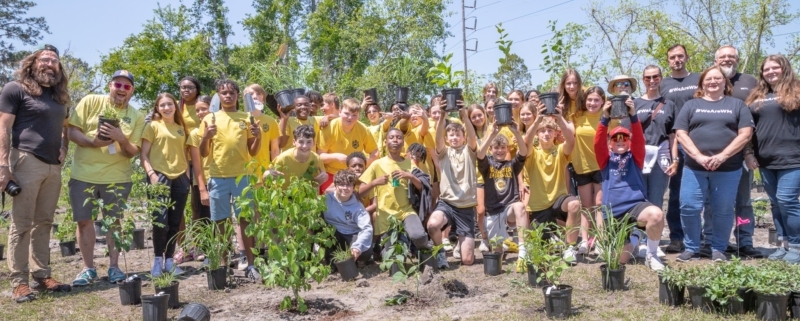
A recent example of this method in action took place in Valdosta, Georgia, where Tandem Global partnered with WM and the Valdosta Middle School STEM Academy to bring a microforest to life. Designed not only as a climate solution but also as a hands-on lesson, the 1,500-square-foot site now hosts over 600 native plants, transforming what was once Bermuda grass into a preliminary microforest. Over 90 middle school students participated in this collaborative planting. Supported by local staff and educators, the project emphasizes biodiversity, ecological function, and long-term stewardship. Species like crepe myrtle and white oak were carefully selected to support native wildlife, while the dense planting approach laid the foundation for a layered, self-sustaining forest. 

This small but impactful site sits in a region prone to flooding and hurricanes, making the improved drainage, deep-rooted plants, and increased soil stability all the more impactful. As the forest matures, it will serve not just as green infrastructure but as an ongoing classroom, offering students the chance to monitor changes in biodiversity, understand ecological relationships, and witness firsthand how nature can reclaim and revitalize an urban space. 

With several microforest projects planned through the rest of 2025, Tandem Global remains committed to applying the Miyawaki method, supporting the restoration and long-term preservation of native biodiversity across diverse landscapes. 

Want to learn more about microforests? Check out our webinar: Forestry on a Smaller Scale: Your Guide to Planting Microforests 

https://tandemglobal.org/wp-content/uploads/2025/09/WMVP25-19-scaled-e1758217185982.jpg 500 800 Nas Soboh https://tandemglobal.org/wp-content/uploads/2025/02/tandem-global-logo-exp.svg Nas Soboh2025-10-13 08:50:562025-10-13 13:25:35Transforming Empty Lots into Living Forests: The Miyawaki Way

Business in the Time of Nature: Toward a New Corporate Imagination

June 18, 2025/by Anna Willingshofer

Anna Willingshofer is the Chief Science and Innovation Officer of Tandem Global

In the stories of the celebrated Colombian writer Gabriel García Márquez, the boundaries between the real and the magical dissolve. Time stretches and loops. Spirits linger. The past speaks into the present. His style of magical realism reminds us that there is often more to the world than what we choose to see.

In the corporate world, it is practical to rely on the visible, the measurable, and the rational – to track progress, reduce uncertainty, and report to stakeholders. But what about the elements that are quietly shaping our reality?

Nature is one of those elements. It is present in every supply chain, every product lifecycle, and every community a company engages in. It sustains, supports, and connects practically all life on Earth, yet it is still not always considered material to core business operations. What if nature was not the scenery, but the strategy?

This shift in thinking—from nature as a passive context to nature as an active framework for innovation, resilience, and value creation—is where real transformation begins. And what companies need to explore with urgency, intention, and a long-term view.

Making the Invisible Visible

Nature’s contributions to business often go unnoticed until they’re gone. Soil fertility, pollination, water cycles, healthy ecosystems—none of these show up on financial statements, but their absence can bring operations to a halt. This is why we need a new kind of realism in business, one that acknowledges complexity, interdependence, and the full value of nature.

Most corporate strategies still view nature through two narrow lenses: as a risk to be managed or a resource to be used. While terms like “natural capital,” “ecosystem services,” and “offsets” help translate nature into business language, they can also oversimplify its complexity and mask the true depth of corporate dependency on healthy, functioning ecosystems.

When ecosystems stop delivering the services companies rely on, it’s not just a reputational issue or a moral failure; it’s a systems failure that ripples across supply chains, financial markets, labor forces, and even geopolitical stability.

From the Site to the C-Suite

Truly integrating nature into business means moving beyond isolated projects and stand-alone, short-term commitments. It requires embedding nature into every part of a company’s operations—from site-based engagement to corporate planning, supply chain decisions, and innovation portfolios. This is not simply a sustainability task; it’s an organizational transformation.

Convincing the C-suite to lead this shift is a necessary step, but it’s only the beginning. Change management must extend throughout the company. Embracing a new relationship with nature involves shifting mindsets, rewiring incentives, and building internal capacity. It means evolving the way teams operate, collaborate, and define success.

Metrics and scientific tools are essential, but so is culture. The real challenge lies in questioning long-held assumptions that have kept nature at the margins of strategic thinking. Leadership must move from asking “What is nature costing us?” to also asking, “What is nature teaching us?” and “How can our success be aligned with ecological health?”

Towards a New Corporate Imagination

Repositioning nature as strategy requires more than new frameworks. Initiatives like the Science Based Targets Network (SBTN) and the Taskforce on Nature-related Financial Disclosures (TNFD) help companies assess, prioritize, and disclose nature-related impacts. But the more fundamental shift is one of mindset: Can profit and nature conservation truly coexist?

Answering that question demands a new kind of corporate imagination—one where nature-based systems replace outdated linear models, where value is co-created with ecosystems and communities, and where transparency is not just a matter of compliance but a commitment to accountability. It also means recognizing that small steps and local actions matter, and that lasting change comes through integration, not isolation.

This is not idealism. It is the emerging reality for companies to understand that ecological intelligence is business intelligence and that nature is good business after all. Those who embed nature into their corporate strategy today will be the ones who thrive tomorrow—not only in market share but also in resilience, trust, and long-term relevance.

At Tandem Global, we work with forward-thinking companies that are making this shift. For example, some of our members are aligning their strategies with global frameworks like SBTN and TNFD, integrating nature-positive approaches across their operations, and developing innovative solutions to reduce their ecological footprint, all while enhancing biodiversity through pollinator programs, restoring critical habitats, and improving supply chain resilience. We help them navigate this complexity, moving from stand-alone projects to integrated strategies that connect site-level actions with corporate goals. We guide them in building internal capacity and creating the cultural change needed to truly make nature a strategic partner.

Contact me to learn more.

https://tandemglobal.org/wp-content/uploads/2025/06/AdobeStock_185128114-Copy.jpeg 530 1100 Anna Willingshofer https://tandemglobal.org/wp-content/uploads/2025/02/tandem-global-logo-exp.svg Anna Willingshofer2025-06-18 12:44:072025-06-25 11:57:24Business in the Time of Nature: Toward a New Corporate Imagination

Tandem Global Nesting Structure Challenge

March 14, 2025/by Patricia Leidemer

“Keep a Green Tree in your heart and perhaps a singing bird will come.” The famous Chinese proverb displays the inspiration humans have drawn from our avian companions for millennia. Spanning from the majestic eagles to the iridescent hummingbirds, birds have been an important piece in the global puzzle of coexistence. Birds help us pollinate plants, keep pest populations in check that would otherwise spread disease, are the main dispersers of seeds, with some species storing upwards of 100,000 seeds each year. In addition, birds have been known to bring a sense of joy and happiness to individuals by not only their enchanting behavior but also their melodious songs.

In North America alone, overall bird populations have decreased by almost 3 billion since 1970, roughly 20%. The significant decline in bird populations is primarily driven by the loss of habitats resulting from the expansion of agriculture and urbanization. Habitat conservation efforts are the best approach to preserve our native bird populations and encourage population growth. One important approach is the conservation of existing habitats through the establishment of protected areas and wildlife reserves. Enhancing habitat connectivity by creating corridors between fragmented habitats can also help birds thrive. By connecting fragmented habitats, we can ensure birds have access to crucial resources during their annual nesting cycle. This promotes a steady rate of population maintenance and reduces stress on existing populations.

A great example of wildlife corridors is the Singaporean Eco-Link. This six-lane, ten-kilometer expressway cuts through two untouched nature reserves, creating an imposing barrier of concrete. In response to the rising number of annual roadkill casualties, including species that have not been sighted in years, the Singaporean Government took proactive measures. Their solution? Building an overpass corridor to reconnect the two nature reserves, ensuring the safety and preservation of local wildlife and commuters. Through conservation efforts like these, balancing the effects of urbanization and the preservation of wildlife becomes increasingly feasible.

Conservation efforts don’t always require a project as expansive as the Eco-Link corridor. You can impact the environment around you with more manageable yet effective initiatives. With conservancy in mind, Tandem Global presented an artificial nesting structure challenge, which was answered by ten companies with truly unique efforts. The winners of this challenge were categorized into four separate groups: Best Raptor Structure, Best Songbird Structure, Best Other Structure, and finally, Best New Build. We’d like to thank all participants for their submissions, all entries showed successful initiatives in adding nesting locations for local bird populations.

Best Raptor Structure – Ontario Power Generation Inc.

Belonging to the order Falconiformes, raptor birds, also known as birds of prey, are a remarkable group of birds that are characterized by their sharp talons, hooked beaks, and keen eyesight. Raptors include eagles, hawks, falcons, ospreys, and vultures. Generally carnivorous, raptors are known for their impressive hunting skills and are at the top of the food chain in their ecosystems.

Ospreys, a large raptor with wingspans of up to 6 feet, are found on every continent except Antarctica. These impressive birds mainly feed on fish, diving from heights of 30-120 feet to catch its underwater prey. Unfortunately, due to habitat loss and a decrease in fish populations, there has been a decline in osprey numbers across the world. However, even with these challenges, there has been a significant recovery amongst osprey populations, specifically on sites with restoration and reintroduction efforts. The Chesapeake Bay area is a prime example of a conservation project which introduces artificial nesting sites for ospreys, most of which rely entirely on.

In Johnstown, Ontario, Ontario Power Generations Inc., has created six artificial osprey nests across multiple company sites. With a lack of suitable trees and available nesting areas nearby, site staff noticed reoccurring nesting attempts on their stored cranes by local osprey. In response, the OPG’s Environmental Support Unit worked with site staff and Hydro One to create an artificial nesting structure for the osprey. The nest is secured to a 60 ft pine and hydro pole positioned approximately 50 feet from the water in a low-traffic area and built to be the highest point on-site, ensuring an optimal nesting environment. Predation concerns were addressed by designing the pole to a sufficient height and incorporating an overhang to deter ground predators.

Best Other Structure – Ontario Power Generation Inc.

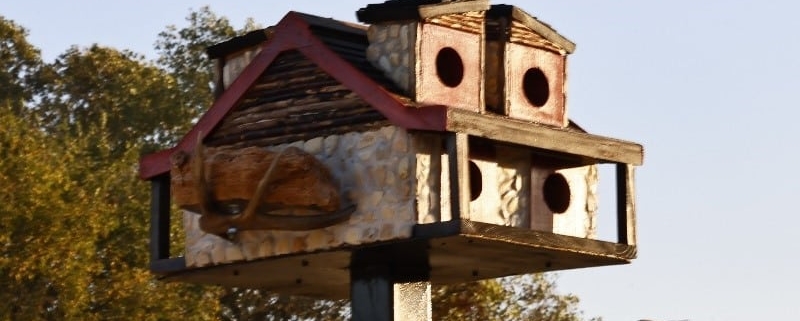
Ontario Power Generation Inc. has once again been recognized for their exceptional conservation effort as the winners of the best other structure. In Greater Napanee, Ontario, OPG has built multiple nesting box structures to support local purple martins. Using an original Lennox housing structure, the installation process incorporated locally salvaged lumber and a steel pole with concrete for post stability. The structures were installed in a grassland area near Lanke Ontario with optimal sun exposure and proximity to water sources. Its height of 15 feet provides a safe vantage point with a clear view of the surroundings. The structure design includes an entrance tunnel allowing easy access to purple martins and reducing predation pressures. This tunnel prevents owls, purple martin’s main predators, from entering the structure. Furthermore, the nesting box includes perches which are too small for owls to comfortably land on, providing secure surroundings.

Best Songbird Structure – Georgia-Pacific

Passeriformes, commonly known as perching birds or songbirds, are one of the largest and most diverse bird orders, comprising almost half of all known bird species. These birds are characterized by their unique feet with three toes pointing forward and one pointing backward, which allows them to easily perch on branches and other surfaces. Songbirds are well-known for their melodious songs, with each species having its own distinct vocalizations for communication and mating purposes. They can be found in a wide range of habitats, from forests to urban areas, and play crucial roles in ecosystems as pollinators, seed dispersers, and insect controllers. Songbirds exhibit remarkable diversity in size, coloration, diet, and behavior, making them a fascinating group of birds for birdwatchers and researchers alike.

Georgia-Pacific’s birdhouse project, around the Neenah Technology Center office building in Neenah, Wisconsin, is designed to create a welcoming environment for native Eastern Bluebird and Tree Swallow populations. The strategic placement of the birdhouses, in consultation with the Heckrodt Wetland Reserve Center, ensured species like Bluebirds and Tree Swallows have suitable nesting conditions. Situated across the NTC ground area, with careful attention to detail, from the minimum spacing between birdhouses to the height above the ground, a total of 12 birdhouses were assembled. Additionally, two birdhouses were modified with skylights to enhance their functionality and safety. Predator deterrent features, such as the absence of perching posts and conical baffles, were incorporated into each birdhouse design. By prioritizing the needs and habitat requirements of these bird species, the project aimed to support songbird settlement, thriving, and population growth in the surrounding open fields.

Best New Build – Covia Holdings LLC

Also concentrating on purple martin populations, Covia Holdings LLC in Roff, Oklahoma, has been recognized as the winner of the best new build. Stemming from a desire to embark on a conservation project on a specific site location, Covia Holdings has created a unique custom nest box tailored to purple martins. In accordance with the Oklahoma Department of Wildlife guidelines, the strategically placed structure is near a large body of water, essential for attracting purple martins, and is within 60 feet of Covia’s office building. Standing 10 feet, this custom nestbox incorporates design elements recommended by Nestwatch and OKDWC, ensuring optimal success in attracting purple martins. The installation of a predator guard further safeguards the nesting structure against potential threats. Assembled with recycled cedar wood, dolomite rock, and cottonwood twigs, sourced onsite, Covia has created a durable and predator-proof abode for purple martins.

Thank you to everyone who participated in Tandem Global’s Nesting Structure Challenge. Our members’ efforts display how conscious endeavors towards the environment can make a difference, no matter the scale.

https://tandemglobal.org/wp-content/uploads/2025/03/Best-New-Build2-e1741959915527.jpg 500 800 Patricia Leidemer https://tandemglobal.org/wp-content/uploads/2025/02/tandem-global-logo-exp.svg Patricia Leidemer2025-03-14 09:42:032025-05-15 15:30:04Tandem Global Nesting Structure Challenge

Unexpected Partners: Putting Wildlife “to Work” at Your Conservation Project

August 15, 2024/by Patricia Leidemer

For many corporate conservationists, attracting wildlife to a site is a major goal of their project. By offering adequate food and water sources and meeting habitat needs, corporate sites can become a haven for target local species, from white-tailed deer to bluebirds, painted turtles to monarch butterflies.

Once wildlife arrives on-site, it’s imperative to monitor populations and ensure the habitat continues to meet their needs — and of course, local animals are always fun to watch and learn from. But did you know wildlife can serve more than just an observational or educational purpose?

The wildlife species visiting a site do not have to be just an outcome of a project — they can also become “partners” in conservation efforts. This blog post will explore how the wildlife attracted to a thriving site further support the health of the environment by providing ecosystem services.

What are ecosystem services?

When wildlife naturally creates a benefit to the surrounding ecosystem or the people nearby, those benefits are called ecosystem services. There are four types of ecosystem services: provisioning, supporting, regulating and cultural.

Provisioning services are the tangible outputs of the environment, like fruits, water, timber and so on. Supporting services, such as nutrient cycling, uphold the health and function of the broader environment, serving as a foundation for all other ecosystem services. Regulating services, like carbon sequestration or erosion control, help to moderate natural processes in the environment, while cultural services provide non-tangible benefits to people like mental health improvements, educational opportunities or social cohesion.

Offering clues into the ecosystem’s health

One of the foundational ways that wildlife support greater conservation efforts is by indicating the health of the ecosystem. Certain species’ characteristics make them particularly helpful in this regard, and they are referred to as bioindicators.

Birds, for example, are very visible and thus easy to detect. They also have strict habitat requirements, and if an environment has changed in a way that no longer supports their needs, birds will leave — their absence serving as an indication that a detrimental environmental change has occurred. Reptiles and amphibians are also excellent bioindicators, as they are highly sensitive to pollution. Monitoring herptile populations through non-invasive methods like coverboard surveys provides insights into the enhancements needed for a thriving habitat.

Taking out invasive species

Invasive species are a serious threat to biodiversity. These non-native flora and fauna proliferate due to a lack of natural predators, outcompeting beneficial native species for resources. The introduction of natural predators to a site plagued by invasive species helps to restore balance. In fact, the use of predators to control invasives is called biological control and is considered a valid method of invasive species management.

Take purple loosestrife, for example. This invasive flora was unintentionally introduced to North America from Eurasia in the 1800s and has since spread to almost every Canadian province and nearly all U.S. states. The galerucella beetle feeds on purple loosestrife and has been used throughout the U.S. since 1992 to effectively control loosestrife infestations. These beetles are just one example of wildlife contributing to a more balanced, healthy ecosystem.

Of course, the introduction of one non-native species to combat another is a delicate operation, and it must be conducted only after extensive testing has determined that the introduced predator is safe to release. But when done effectively, biological control manages a troublesome invasive species while reducing the need for chemical herbicides or insecticides that have adverse effects on the rest of the ecosystem.

No need for a degree to be nature’s engineers

Some animals are adept at constructing habitat structures. Known as ecosystem engineers, these species will modify the environment to create a habitat for themselves, which in turn is sometimes used by other species as well. For example, chipmunks build tunnels, called burrows, to house their nests and stores of food. When chipmunks discontinue use of these burrows, snakes then use them for shelter.

While constructing their own habitats, ecosystem engineers often provide ecosystem services that benefit the rest of the ecosystem. Beavers are a prime example of beneficial ecosystem engineers, as their dams not only provide habitat, but they also support water quality and even help mitigate climate change impacts.

Sometimes, interference from beaver dams can cause issues, especially if it blocks important water flow. Non-lethal methods for coexisting with beavers include beaver deceivers and flow devices that restore the flow of the water body without harming or removing beavers.

Spreading the love (and the seeds)

Each season, a garden or forest habitat may need additional plantings to fill in gaps or replace plants. This task is where the ever-useful seed dispersers of the ecosystem can shine. Have you ever watched a squirrel bury an acorn and forget where they left it, resulting in an oak seeding? That’s animal seed dispersal in action.

From bison to bats, tons of animals disperse seeds, either by dropping them or by discarding fruit seeds after the digestion process. While seeds are naturally carried to other locations through means like gravity and wind, animal dispersion is an important method by which native plants proliferate.

Not only does seed dispersal allow for continued colonization by plant species, but it also ensures that the new seedlings have enough resources to survive without crowding or competing with others. When animals like birds, rodents or even insects carry and drop seeds in new locations, they are helping to support the area’s biodiversity — and corporate conservationists don’t need to do a thing!

Your weeds are their feeds

Keeping a grassland free of noxious weeds can be a full-time job. Not only are they consistent and time-consuming tasks, but weeding and mowing also utilize energy, emit greenhouse gases, incur high costs, create noise and disturb grass-dwelling wildlife. With all these downsides, a more sustainable alternative is welcome to many corporate conservation professionals.

Luckily, wildlife can once again be a valued partner in vegetation management efforts. Many species will feast on the weeds, grass and woody vegetation on a site, cutting down on the human-facilitated maintenance needed.

Grazing animals like cattle and sheep eat grass and low vegetation, while browsing species such as deer and giraffes feed on woody plants and leaves. Not only does allowing for grazing and browsing offer numerous benefits for corporate landowners, but it also provides an abundant supply of food for local wildlife. Depending on their diet, grazers and browsers can also target those pesky invasive species, and a lack of dry brush reduces fuel for potential wildfires.

Wildlife is an incredible asset to a conservation site — from invasive species control to engineering to seed dispersal, the ecosystem services they provide make animals powerful partners in conserving and supporting biodiversity.

https://tandemglobal.org/wp-content/uploads/2024/08/WL_whitetail-deer_AdobeStock_189561069-3-scaled.jpeg 1357 2048 Patricia Leidemer https://tandemglobal.org/wp-content/uploads/2025/02/tandem-global-logo-exp.svg Patricia Leidemer2024-08-15 11:54:392024-08-15 11:54:39Unexpected Partners: Putting Wildlife “to Work” at Your Conservation Project

Decrease Lightning Strikes and Four More Surprising Benefits of Native Plantings

July 11, 2024/by Patricia Leidemer

You’ve probably heard about a few of the common benefits of including plants in your landscape, like their ability to improve biodiversity and provide food for important wildlife like pollinators. But plants can do much, much more — from protecting against lightning strikes to feeding the community. And ensuring that the plants installed are native to the region increases these benefits even further. This blog post explores the surprising range of native plants’ advantages, adding to the list of reasons to install native plants in your next garden or habitat.

Strike out lightning

In urban areas that lack green space and plant cover, pavement and other non-natural materials will absorb and retain heat from the sun. This phenomenon, known as the urban heat island effect, has only been exacerbated by climate change and increased industrialization and urbanization.

Because of the higher temperatures of the urban heat island effect, more energy is utilized to cool the area, resulting in increased air pollution. Hotter temperatures and large amounts of air pollution create — quite literally — a perfect storm, as it has been documented that locations with this combination of factors experience more frequent lightning strikes. Native plantings, specifically urban forestry, help to address the urban heat island effect and mitigate particulate air pollution, thereby addressing two of the major contributors to increased risk of lightning strikes.

WHC has been putting this information to good use with energy company Energy Transfer in southeastern Texas cities like Port Arthur, Beaumont and Orange. This location’s increased temperatures and its proximity to Houston, the co-called “Lightning Capital of Texas,” make it more lightning-prone. This year on Arbor Day, WHC partnered with Energy Transfer and several local schools to plant 120 native trees that will not only increase tree canopy but also help reduce lightning strikes.

Hold back the flood

Large amounts of impervious surfaces, like parking lots and sidewalks, lead to runoff from rainfall. With little natural ground into which runoff can soak, heavy rainfall easily leads to flooding. Not only is flooding detrimental to infrastructure, but it also affects local watersheds by altering hydrology and introducing pollutants.

That’s where native plants come in, as they are particularly well-suited to manage and absorb stormwater runoff. Many native plants are equipped with long, complex root systems. These deep roots are able to absorb large amounts of rainfall and runoff, allowing it to infiltrate the soil rather than cascading across impervious surfaces.

An added benefit of native plants’ root structures is that they help prevent erosion by stabilizing the soil. Not only do native plants absorb excess runoff that could erode the terrain, but they also support the soil health and stability of an area, keeping the landscape intact for years to come.

Sprout savings

Because native plants are adapted to the conditions of a specific location — including the temperature, rainfall, soil, wildlife usage and more — they are incredibly resilient.

Due to their suitability to their native range, native plants generally demand less maintenance than ornamental plants. This means less money and time — as well as fewer natural resources — expended on plant care. For example, native plants require less need for fertilizer application, pesticide usage and irrigation than non-native plants. In fact, native plants use four times less water than a traditional lawn, illustrating a great financial reason to convert a manicured lawn into a thriving native plant ecosystem. The strength and resilience of native plants also cuts down on the need to replace dying or ill-suited plants.

Additionally, the hardiness of native plants means they have an increased capacity to protect against the encroachment of invasive species. In an established native plant ecosystem, invasives may have a harder time taking root, which helps prevent the costly and time-intensive process of eradicating invasive vegetation.

Make people happier and safer

Plants are good for the mind. Research has shown a positive correlation between improved mental state and exposure to nature, with one Mental Health Foundation survey finding that 70% of adults in the U.K. saw an improvement in their mood when they are close to nature. Providing access to nature by bringing native plants into schools, workplaces and centers of community helps people feel better — and getting community members involved in plant care has its benefits, too, from increased exercise to decreased stress levels.

Plants may even go further to support people’s well-being, as an interesting study presents a correlation between increased vegetation and lower crime rates. Researchers at the University of Illinois compared aerial photos and police reports in Chicago to find that locations with lots of foliage and tree cover had 48% fewer property crimes and 56% percent fewer violent crimes than areas lacking plant cover. Since the publication of this research, studies in Philadelphia and Cincinnati have come to similar conclusions.

While a full explanation of this connection between trees and lower crime is still unclear, experts suggest it may have something to do with an increased sense of community that comes from seeing that local areas are well-taken care of. Regardless of the reasons why, it’s clear that native plants make a positive impact on the community’s mental health and well-being.

Produce a healthy harvest

Yes, native plants are the top choice when it comes to meeting the critical food needs of native wildlife — but native plants can also serve as an excellent food source for people. Particularly in locations seen as “food deserts,” healthy, affordable options can be difficult to obtain. Edible gardens comprised of native plants can help to close the food gap by making fresh produce available for the community.

Edible gardens provide local, in-season fruits, vegetables and nuts — from walnuts and serviceberries to wild onions and paw paws. They can vary in size, so even a small area like a rooftop, vacant lot or office park courtyard could host an edible garden.

In addition to the obvious benefits of providing food, edible gardens also offer an opportunity for community involvement and education. Partnering with local community centers, schools, youth-serving organizations or food banks can help ensure that an edible garden has gardeners to tend to it and beneficiaries who can enjoy the harvest.

These lesser-known benefits of native plants illustrate their wide-ranging capabilities, so the next time you’re looking for some plants to include in your workplace or backyard garden that will have a great impact on the environment — and beyond — pick native plants.

https://tandemglobal.org/wp-content/uploads/2024/07/LS_black-eyed-Susans_TVA-3-scaled.jpg 1536 2048 Patricia Leidemer https://tandemglobal.org/wp-content/uploads/2025/02/tandem-global-logo-exp.svg Patricia Leidemer2024-07-11 12:20:432024-07-11 12:20:43Decrease Lightning Strikes and Four More Surprising Benefits of Native Plantings

Culture, History and Conservation Collide in New Orleans: Looking Back at WHC Conservation Conference 2024

June 26, 2024/by Patricia Leidemer


For more than 30 years, WHC (Wildlife Habitat Council) has been convening professionals working at the intersection of business and biodiversity. As the only international non-profit enabling private sector action for nature, WHC recognizes the importance of partnership and collaboration to facilitate effective conservation efforts worldwide.

The annual WHC Conservation Conference provides the opportunity for corporate professionals and partners working in the nature space  to make valuable connections, learn from each other and celebrate the successes of the past year. Previously hosted in Baltimore, Maryland, and Detroit, Michigan, the 2024 WHC Conservation Conference was held for the first time in New Orleans, Louisiana — a city rich with culture as well as groundbreaking conservation efforts to support climate change mitigation, green infrastructure integration and community involvement in sustainability efforts.

Keynote speakers inspiring action

Matthew Cappucci, stormchaser, meteorologist and author of Looking Up: The True Adventures of a Storm-Chasing Weather Nerd, treated attendees to a captivating multimedia presentation in which he traced his career journey from his interest in weather at an early age to becoming his high school’s de facto weatherman to unexpectedly forging a college program.

True to his fame as a stormchaser, Cappucci shared videos from his experiences that practically put the audience into the middle of extreme storms. His discussion of his educational experience reinforced the critical nature of accessible STEM education, with corporate audience members taking home the message that today’s students are tomorrow’s trailblazers in science and sustainability.

To illustrate the vast nature of conservation work happening in the New Orleans area, Chuck Morse, Executive Director of Thrive New Orleans, opened the conference with a keynote presentation expounding on the social, environmental and economic impacts of on-the-ground conservation work, as exemplified in New Orleans. Thrive was developed post-Hurricane Katrina to restore neighborhoods for community members returning to the city in the wake of the storm. Morse shared how workforce development is key for Thrive’s environmental efforts, by empowering community members to access career paths in sustainability. “Progress moves at the speed of trust,” Morse explained, emphasizing the importance of engaging with community wisdom when developing wide-reaching conservation plans.

Adding to the conference’s slate of expert speakers was WHC President Margaret O’Gorman, who presented her annual State of Corporate Conservation address reflecting on the value of time when it comes to conservation efforts. In her address, O’Gorman recounted memorable conservation stories from members over the past year, such as Ontario Power Generation’s innovative use of drone imagery to monitor invasive species and the discovery of the New Guinea singing dog at a Freeport-McMoRan site in Indonesia. She also recognized the long-standing tenure of WHC members Covia, Vulcan Materials and WM, all marking 35 years of membership.

Galvanizing corporate and community support to meet Louisiana-specific needs

Continuing to make the most of this year’s host location, a panel comprised of representatives from several Louisiana organizations convened to discuss how collaborative partnerships are benefitting the region’s specific needs. Traci Birch, Associate Director of the LSU Coastal Ecosystem Design Studio, facilitated the discussion, which touched on exacerbated climate change impacts and the sheer amount of port-based commerce happening in the state. Two major themes reiterated by members of the panel were the need to build resilient infrastructure and the crucial involvement of community partners to make a positive impact.

Davie Breaux, Deputy Port Director of Port Fourchon, shared examples of green infrastructure and wetlands restoration contributing to the region’s resilience, as well as the value of partnerships for efforts such as emissions monitoring. Susannah Burley, Founder and Executive Director of Sustaining Our Urban Landscape (SOUL) traced how the original creation of New Orleans led to massive deforestation. Burley explained that New Orleans’ tree canopy percentage ranks the lowest of eight nearby cities, and since the city’s low-lying coastal location makes it more susceptible to climate change impacts, reforestation is a crucial need. Chuck Morse of Thrive NOLA returned to further discuss the importance of community engagement.

Supporting women working in the corporate conservation space

WHC Conservation Conference 2024 included the inaugural in-person meeting of Elevate, sponsored by CRH, WHC’s professional network for women working in business and nature. Elevate, formed earlier this year, aims to support women in sustainability roles by facilitating open forums of discussion, providing mentorship opportunities and bringing women together to address the challenges and embrace the opportunities of working in the corporate conservation space.

Chris May, SVP, Safety, Health & Environment of CRH Americas and Livonia Mitchell, VP of Engagement and Impact at CRH, participated in a question-and-answer session facilitated by WHC Chief Science and Innovation Officer Anna Willingshofer. The women shared insights into navigating male-dominated fields, finding mentors, dealing with imposter syndrome and more. Following this engaging Q&A, members of Elevate had the chance to network in person for the first time since the group’s formation, forming connections that will only help to strengthen the impact of women working in sustainability.

Recognizing and celebrating conservation successes

Throughout the two days of WHC Conservation Conference, individual corporate conservation projects were honored with the WHC Awards, which recognize stellar examples of conservation — from species protection to landscape restoration to community education and engagement and more. Around the U.S. and around the world, the 2024 WHC Award winners exemplify WHC’s belief that Every act of conservation matters®.

This year’s Conference closed with the always lively WHC Awards Dinner, at which the event’s sponsors were recognized and the winners of the final WHC Awards were announced. In addition to the presentation of the Corporate Conservation Leadership Award to WM, the Gold Program of the Year Award to WM’s El Sobrante Landfill and Wildlife Preserve, and the Employee Engagement Award to Freeport-McMoRan, the winner of the Ibis Award was also announced. Named for the bird that is often credited as the last to leave before a storm and the first to return, this honor recognizes a conservation program’s resilience in the face of unexpected challenges. This year, Occidental Petroleum Corporation’s Belle site won the Ibis Award. After refocusing employee efforts on legacy clean-up efforts, the Belle team engaged help from the community to support the program’s avian monitoring efforts, allowing them to achieve WHC Certification again after 13 years.

Companies’ pride in their accomplishments is always evident at the WHC Awards Dinner, with attendees bringing festive noisemakers, New Orleans-themed costume pieces and intricate table decorations to show their team spirit — and bid for the WHC Spirit Award. This year, the competition for this award was so fierce that it ended in a tie, with Summit Materials and Freeport-McMoRan bringing home the honor. It was a fitting end to an event focusing on the importance of collective action and celebrating the accomplishments of dedicated corporations — and attendees left New Orleans feeling energized, enlightened and excited to meet again for WHC Conservation Conference 2025 in Detroit, Michigan.
[/av_textblock]

https://tandemglobal.org/wp-content/uploads/2024/06/53817938085_bdb562b358_k-e1719420487199.jpg 500 800 Patricia Leidemer https://tandemglobal.org/wp-content/uploads/2025/02/tandem-global-logo-exp.svg Patricia Leidemer2024-06-26 12:32:372024-06-26 14:25:46Culture, History and Conservation Collide in New Orleans: Looking Back at WHC Conservation Conference 2024

Where is Your Company on the Nature-Positive Journey?

April 9, 2024/by Patricia Leidemer

From external regulatory pressures to internal corporate commitments, there is a myriad of reasons why a company may begin thinking about its dependencies and impacts on nature. WHC knows this all too well from 35 years of experience supporting the private sector in biodiversity-related efforts.  

While the reasoning behind a corporate commitment to nature positivity varies from company to company, WHC has identified many commonalities across industries and sectors. With companies increasingly looking to engage in nature-positive actions, WHC aggregated these common findings into a model called the Nature-Positive Journey. 

But what does this journey look like, and how can companies get started? WHC experts addressed these questions and more in a recent webinar focused on the how and why of corporate nature positivity. 

Why get started now? 

In order to set the scene for the Nature-Positive Journey, it’s important to understand why companies should embark on this journey now. The earth is currently experiencing a nature crisis, considered by many to the be planet’s sixth mass extinction event. There has been a documented 69% decrease in monitored global wildlife populations since 1970, and factors like habitat loss, overexploitation of nature, invasive species, disease and climate change are all drivers for biodiversity loss worldwide. These biodiversity losses will not only impact nature, but also the global economy, as over half of the world’s GDP is dependent on nature. 

Because of these impacts, governments, financial institutions and corporations are beginning to take concrete action for nature. Due in part to the Kunming-Montreal Global Biodiversity Framework, which was adopted by 196 countries at COP 15 in December 2022, governments are developing national action plans to reach nature-positive targets, including requirements for businesses. It is clear that, because of the dire state of biodiversity and these growing external pressures, now is the time for companies to act for nature. 

Navigating the ecosystem of nature-related frameworks 

Momentum is quickly gathering across many sectors to focus on nature-positive outcomes, resulting in various initiatives, tools and frameworks related to environmental, social and governance (ESG) concerns. Many companies have relayed to WHC that the complicated landscape of these emerging frameworks can feel daunting, so having a clearer picture of their expectations and interoperability can help companies determine which frameworks best fit their needs. 

A few notable frameworks include the Taskforce on Nature-related Financial Disclosure (TNFD) and the Science-based Targets for Nature (SBTN). TNFD focuses on nature-related risk management and disclosure, with these disclosures helping companies prepare for Target 15 of the GBF, and SBTN provides guidance for place-based impact management. While both frameworks ultimately develop action plans to meet and report on nature-related targets, TNFD focuses heavily on disclosure, whereas SBTN’s focus is more on acting and tracking measurable targets.  

TNFD and SBTN are just two of the many frameworks, initiatives and regulations that currently exist, with more undoubtedly on the way. As such, it can be difficult to parse the connections between them and understand where each framework fits into an overall nature-related strategy. WHC is working to simplify this, using a sample scenario in the webinar to illustrate how various initiatives, as well as additional actions like WHC Conservation Certification®, each play a role in a company’s nature-related assessments, commitments, disclosures and transformation.  

Watch WHC’s free, on-demand webinar to learn more about the various nature-related frameworks. 

Hearing from companies about their place on the journey 

Considering there are many frameworks and initiatives that support a goal of reaching nature positivity, many companies are wondering how to get started. Every company’s journey will look different, and there is rarely a straight path to nature positivity, as external and internal disruptions will inevitably have an impact. Despite this variability, WHC has identified six general phases on the Nature-Positive Journey. 

A company will typically start in the exploration phase, where it begins to understand its relationship with nature. Once a company has determined that biodiversity is material to its success, an internal commitment to take nature-related action often follows. Further assessments and planning help to identify specific nature-related risks, impacts, dependencies and opportunities across locations, business units and supply chains. Based on these findings, a company develops a nature strategy to address these impacts, which it often pilots and adapts at a subset of locations to collect feedback and adjust before adopting and launching it more broadly. Armed with this nature strategy, a company can go on to continuously innovate in the face of new regulations, competition and increased understanding of nature – becoming an industry leader. 

Attendees on the webinar represented an interesting cross section of the private sector, and they provided useful data about the corporate nature-positive journey in a brief poll. When asked about their company’s current position on the nature-positive journey, most respondents indicated they are in the two earliest stages: Exploration (35%) or Assessment & Planning (27%). The majority of respondents were no further than the Exploration phase in their journey, with only 10% having reached the Adoption & Launch phase. 

When asked about the barriers they see limiting their advancement on the journey, financial resources (35%) and lack of knowing where to start (27%) were the top responses. Specifically, a lack of knowing where to start was indicated as the biggest hurdle for those in the Exploration and Assessment & Planning phases, while a lack of financial resources was the top reason for not advancing in three phases: Commitment, Piloting & Adapting and Strategy Adoption & Launch.

These findings show that guidance and support early in the journey is a top need for many companies. WHC is working to meet this need by developing offerings that can help propel companies to the next step on the journey. From biodiversity fitness screenings to framework readiness assessments to the creation of a corporate nature strategy, WHC has created a menu of options to support companies at all phases of the Nature-Positive Journey.  

Descriptions of these offerings, their placement on the nature-positive journey and real-life examples are available in WHC’s free white paper: The Corporate Nature-Positive Journey| Private Sector Biodiversity Methodologies, From Strategy to Implementation. 

Ready to get started?  

By embarking on the Nature-Positive Journey and implementing a corporate nature strategy, companies benefit in a number of ways. Not only does a nature strategy demonstrate a company’s commitment to both people and planet, but it can also support other corporate-level strategies for climate or sustainability. A nature strategy helps a company align with various regulatory and financial expectations and supports business decision-making by putting a focus on nature-positive actions and lowering nature-related risks. 

As biodiversity becomes more of a hot-button issue, and with the emergence of more voluntary nature and regulatory nature-related disclosures and expectations, it is clear that now is the time for companies to act for nature. Want to learn more? Watch WHC’s free, on-demand webinar for more details on the steps on the corporate Nature-Positive Journey and to learn how, no matter where you are, you can start taking action for nature.

https://tandemglobal.org/wp-content/uploads/2024/04/LS_AdobeStock_218279884_Wyoming-scaled.jpeg 1361 2048 Patricia Leidemer https://tandemglobal.org/wp-content/uploads/2025/02/tandem-global-logo-exp.svg Patricia Leidemer2024-04-09 10:01:052024-04-09 11:48:33Where is Your Company on the Nature-Positive Journey?

Practical or Pretty? Garden Enhancements that Benefit Wildlife

March 20, 2024/by Patricia Leidemer

The sun is shining, birds are chirping and new blades of grass are beginning to poke up through the brush. With spring approaching, now is the time to start planning a beautiful, beneficial garden. Native, pollinator-friendly plants serve as food and shelter for wildlife while improving aesthetics, and planting guides are an excellent resource to determine the best plants to include in a garden. 

But once the garden plot has been designated and the plant list has been determined, what about the human-devised enhancements? While it may be fun to paint a butterfly house or install a bird feeder, which of these garden additions are truly practical for native wildlife, and which are just pretty ornamentation? In this blog, we’ll explore common garden enhancements that provide valuable benefits for species as well as alternatives for some less-practical features.  

Flutter by the butterfly house  

Floating along on gusts of temperate wind, butterflies feel like a sure sign of spring. If the native plants in your garden are attracting butterflies, it may be tempting to get them to stay a little longer by constructing a butterfly house. But these slender structures, while pretty, don’t tend to be very popular with the target species. Instead, a butterfly house is often likely to end up a roach motel or a wasp haven. 

Instead, arrange a selection of flat rocks in an area that receives ample sunlight. Butterflies are ectothermic, which means they need heat from the sun to regulate their body heat, and if their body temperature drops too low, butterflies are unable to fly. Flat, warm rocks provide the perfect place for butterflies to flatten out their wings and warm up — and may be much more inviting than a butterfly house. 

Take a dip in the bird bath 

It is infinitely fun to watch birds splash around in a bird bath, and in addition to their entertainment and aesthetic values, these enhancements serve a very practical purpose for wildlife. The bathing aspect is just a small part of the function of bird baths – more practically, they provide safe drinking water. Especially in the hot summer months, a source of drinking water makes a space much more wildlife friendly. 

Bird bath location is key, as birds will prefer a bird bath where they feel safe. Installing a bird bath near trees or other vegetative cover gives birds a protected place to perch. Cover from trees will also keep the birth bath from getting too hot during the day and prevents algal growth. 

While designing a bird bath, consider adding water features for species beyond birds. Shallow puddles are suitable for bees and butterflies, and they are easy to construct using a large saucer, some sand and several small rocks. A few pieces of fruit or fruit juice can be added to further entice these species to your garden puddle. 

Welcome to the toad abode 

Toads are an unsung garden hero, as they eat common pests like mosquitos and slugs. Attracting toads to help address a pest problem may be a priority, and some gardeners want to give these visitors a permanent home in the form of a toad house. 

It can be a fun project to design and decorate a toad house — and if the house is made from non-toxic materials, it won’t be harmful — but it’s not a necessary step to ensure toads have a suitable habitat. 

Opting to use materials like rocks, sticks or leaf and brush piles can be effective too, as amphibians like toads often seek cover in these natural shelters. A simple piece of plywood or metal can easily become a coverboard, which provides warm conditions as well as cover from predators for a variety of reptiles and amphibians.  

Bird feeding frenzy 

As spring unfolds, so does an increase in bird activity. Migratory species are returning, and avians of all kinds are trying to attract a mate, build a nest and of course — find food. There is debate about the benefits of bird feeders, especially during times of the year when food sources may still be scarce.

There are several risks associated with bird feeders. As they attract a large number of different birds to a relatively small area, feeders can lead to a higher likelihood of birds contracting parasites or pathogens from each other. Also, a bird feeder’s proximity to windows could result in increased bird strikes. In general, introducing bird-safe window fixtures such as decals, tape or screens is a good practice to help protect birds from window collisions. 

Relying on nature rather than humans for food is generally a more sustainable option for wildlife, so including bird-friendly native plants in the garden is great way to help feed the birds. By summertime, when plants are in bloom and insects are plentiful, birds can usually find food without human assistance.

A place to nest, a place to roost 

It is estimated that millions of acres of bird habitat are lost each year. Along with this habitat loss comes a lack of access to nesting resources, which impacts bats as well as cavity-nesting birds. With both bat and bird populations experiencing declines worldwide, providing nest boxes for these species in or near a garden is a beneficial way to help their numbers rebound. 

Ideal nest box specifications depend on the location and the type of bird being targeted, but it is recommended that nest boxes be built from untreated wood and galvanized screws, with a sloped roof and drainage holes to keep the nest dry. Predator guards protect the young inside, and routine nest box monitoring provides data that can be submitted to community science initiatives to provide insight into the health of the population.  

Looking for more tips on constructing a nest box? Watch our on-demand webinar, and then enter your nesting structure in our contest by November 1!

If you’re interested in supporting other winged wildlife, bat boxes are a beneficial way to provide safe roosting places. The ideal location for a bat box is in an area where bats have been observed feeding. Mount a bat box on a building or large structure rather than a pole or tree, as these provide a consistent temperature for the interior of the box. Ensure the bottom of the bat box is at least 10 feet from the ground and 20-30 feet from any trees, and clean or repair the boxes in autumn or winter when they are not occupied. 

Part of the fun of planning a garden is deciding which enhancements will feature in it, and these tips can help ensure any garden additions this spring are both practical and pretty. 

https://tandemglobal.org/wp-content/uploads/2024/03/bird-bath-5290285_1920-e1710943550798.jpg 500 800 Patricia Leidemer https://tandemglobal.org/wp-content/uploads/2025/02/tandem-global-logo-exp.svg Patricia Leidemer2024-03-20 10:06:052024-03-21 11:09:38Practical or Pretty? Garden Enhancements that Benefit Wildlife

Doing Our Part to Keep Them Here: Small Steps to Support Species of Concern

February 5, 2024/by Patricia Leidemer

At the end of 2023, 21 species were removed from the United States Endangered Species Act (ESA) list, officially denoting them as extinct. Species loss has a serious and widespread impact on biodiversity, from a reduction in vital ecosystem services like pollination to disruptions in the food chain.   

Because of the crucial importance of sustaining species threatened with extinction, countries across the globe have implemented anti-poaching laws, cooperative plans between agencies and financial assistance for conservation efforts. Initiatives like the ESA and the Convention on International Trade in Endangered Species have enacted policies to protect species of concern, with species like the giant panda and humpback whale exemplifying the success of these large-scale efforts. 

But international collaborations and legislation are not the only ways to protect endangered species. Even at a local level, corporate landowners can meet the needs of these species and help them thrive for many years to come. In this blog, we’ll explore simple actions corporations can take to support their nearby species of concern.  

Provide food and shelter with native plants 

Native plants provide numerous benefits for the environment — they reduce air pollution, require less water than ornamental species and beautify locations. In addition to these benefits, they also serve as food and shelter for many endangered species. For example, pollinators at risk of extinction depend on native flowering plants for food, while small mammals like the Vancouver Island marmot find shelter in native grasses and sedges.  

Corporate sites can help species of concern by determining the food and nesting needs of endangered species in their area and propagating or installing native plants that fulfill those needs. Even a small pollinator garden at an industrial park or a rain garden at a manufacturing site can provide crucial resources for endangered species.  

Control invasive species

Invasive species are plants or animals that have been introduced into an area where they are not native. As they have no natural predators or controls, invasive species tend to proliferate quickly, taking resources away from native species. For species of concern, invasives pose a threat by competing for already limited resources, with 42% of endangered species at risk of extinction due to invasive species. For example, garlic mustard is an invasive plant species throughout much of the United States and Canada, and its soil-altering properties and vast seed production means it pushes out the endangered American ginseng.  

By managing invasive flora and fauna, corporate sites can help the native ones prosper. Developing and adhering to a monitoring plan can alert a corporate landowner to the presence of an invasive species, and further steps like trapping, relocating or mowing the invasive species contribute to the health of endangered species. 

Stop using herbicides and pesticides 

While many large landholders opt to control unwanted (or even invasive) plant species and insects through the use of herbicides and pesticides, these substances bioaccumulate in organisms throughout the ecosystem, including species already at risk of extinction. This means that as an herbicide or pesticide moves through the food chain, its negative effects can build up and harm many of the species the chemical comes into contact with.  

The bald eagle is perhaps the most well-known example of the impact of pesticides. Due to its widespread use, the pesticide DDT contaminated waterways and the fish inhabiting them. Bald eagles then preyed on the impacted fish, ingesting the pesticide and producing brittle eggshells that did not allow for successful hatching. Thanks to legislation banning DDT, bald eagle populations have seen a resurgence in recent decades, and the species is no longer listed as endangered. 

The same solution that helped revive bald eagle populations applies to corporate sites as well — discontinuing the use of pesticides and herbicides. Implementing an herbicide- and pesticide-free policy supports the health of endangered species and the ecosystem as a whole. Integrated vegetation management techniques, such as hand-pulling, prescribed burns and the use of mulch and compost, can help companies control unwanted weeds without the use of chemicals. 

Make roadways safer  

It is estimated that 1 to 2 million collisions between vehicles and large wildlife occur annually in the United States. In an area where species of concern are located — especially if it is adjacent to a busy industrial site — vehicle collisions only add to the environmental risks these species face. From endangered mammals like the Iberian lynx to reptiles like the desert tortoise, vehicle collisions are among the largest threats to the species.  

By installing signage to warn motorists and installing fences that prevent wildlife from accessing roads, companies can prevent dangerous collisions — for both wildlife and humans. Simple actions, like placing watering devices and planting food sources in less busy areas, can help deter wildlife from roadways. 

Spread the word 

Because they are a tangible reminder of the threat of species loss, species of concern often capture the attention of the general public. Connecting an animal’s face — whether that’s charismatic megafauna like the elephant or a small endangered insect like the dinosaur ant — to the potentially nebulous concept of biodiversity loss helps individuals better understand what is at risk and encourages them to get involved. 

Corporate action to support a local species of concern can serve as a foundation for building community education and awareness. By sharing steps both large and small that corporations are taking to protect endangered species, community members can feel emboldened to take part in these activities as well, expanding the protection of species of concern beyond the corporate fence line. Events like school visits and citizen science activities involve a broader range of stakeholders and demonstrate how even small actions make a difference for species of concern. 

Preventing the extinction of species doesn’t just rely on widescale initiatives, legislation and expensive marketing campaigns — corporate landowners can have a powerful impact by taking simple steps to protect local species of concern. 

https://tandemglobal.org/wp-content/uploads/2024/02/16683435223_d632f9ab78_o-scaled.jpg 1363 2048 Patricia Leidemer https://tandemglobal.org/wp-content/uploads/2025/02/tandem-global-logo-exp.svg Patricia Leidemer2024-02-05 01:30:222024-08-26 16:24:17Doing Our Part to Keep Them Here: Small Steps to Support Species of Concern
Page 1 of 9123›»

Pages

  • 2015 WHC Award Winners and Finalists
  • 2016 WHC Award Winners and Nominees
  • 2017 WHC Award Winners and Finalists
  • 2018 WHC Award Winners and Finalists
  • 2019 WHC Award Winners and Finalists
  • 2020 WHC Award Winners and Finalists
  • 2021 WHC Awards Winners and Finalists
  • 2022 WHC Awards Winners and Finalists
  • 2023 WHC Awards Winners and Finalists
  • 2024 Awards Dinner Menu
  • 2024 WHC Awards Winners and Finalists
  • 2025 Tandem Global Awards Winners and Finalists
  • Become a white paper sponsor
  • Brand Guidance for Members and Partners
  • Certification
  • Certification Support Center
  • Climate Action Works
  • Conference 2026 Speaker Guidelines
  • Conference 2026 Speaker Nominations
  • Conference Draft
  • Conservation Conference 2024 Agenda
  • Conservation Conference 2024 Exhibitor Form
  • Conservation Conference 2024 Exhibitors
  • Conservation Conference 2024 Travel Information
  • Consulting – From Old Site (Delete later)
  • EAC Confirmation
  • Earth Day and World Environment Day Events
  • Earth Day Planting Event
  • Events
  • Executive Thought Leadership Events
  • Five Star and Urban Waters Restoration Grant Program
  • Get Involved
  • Home
  • Industry News
  • Nature Steward Alliance
  • Nature-based Solutions for Pollution Prevention
  • Nesting Structure Challenge
  • New to Certification?
  • News & Insights
  • Official Signage
  • Our Brand
  • Our Brand (copy)
  • Our Network
  • Our Origin Short Story
  • Payment Center and Donations
  • Payment Confirmation
  • Payment Failed
  • Planting Event Registration | October 18
  • Planting Event Registration | October 25
  • Pollinators
  • PR Materials for Certified Programs
  • Privacy Policy
  • Project Guidances
  • Project Guidances Overview
  • Registration Information
  • Reports and Toolkits
  • Saving Bats from Decline
  • Social Impact
  • Spirit Award
  • Sponsor Events, Content and Programming
  • Sponsor Interest Form
  • Sponsor webinars
  • SS Project
  • SS Search Results
  • STEM and Environmental Education
  • Style Guide
  • Subscribe
  • Tandem Global Awards Dinner Program and Menu
  • Tandem Global Conference 2025 Agenda
  • Urban Forestry
  • WHC at COP16
  • WHC Project Guidances
  • Who We Are
  • About Certification
  • Application Overview
  • Attend an Event
  • Conservation Certification Versioning
  • Conservation Conference 2024
  • Consulting Services
  • Executive Advisory Committee
  • External Review Process
  • Fees
  • From the CEO
  • Meet Our Members
  • Mission, Vision, Values
  • Monitoring Templates
  • Navigation Tips
  • Overview of Requirements
  • Privacy and Security Policies
  • Project Types
  • Recognition
  • Social Impact
  • Tandem Global Conference 2025
  • Tandem Global Conference 2026
  • Thought Leadership
  • What is WHC Certification?
  • WHC Index
  • Awards
  • Awards and Recognition
  • Blog
  • Careers
  • COVID-19 Accommodations
  • Create an Account
  • Determining Your Project Types
  • Generating an Invoice
  • Habitat Project Requirements
  • Habitat Species Inventories
  • How Your Application is Evaluated
  • Issue-Based Initiatives
  • Key Considerations for Applying
  • Member Spotlight
  • Stakeholder Input
  • Understanding Project Types
  • Webinars
  • What It Means to Be Certified
  • White Papers
  • Become a Member
  • Contact
  • Elevate Network
  • Informational Videos
  • Managing Your Account
  • Marketing Support
  • Our People
  • Paying Invoices
  • Point Values
  • Press
  • Renewal Applications
  • Species Project Requirements
  • Value of WHC Certification
  • WHC Awards
  • Working in the Certification Website
  • Deadlines
  • Education Project Requirements
  • How to Apply
  • Program Registration
  • Scoring Sheets
  • Site and Program Contacts – Start Here
  • Add People/Edit or Remove Permissions
  • Application Outcomes
  • Corporate Contacts – Start Here
  • Finalizing and Submitting Your Application
  • Other Options Project Requirements
  • Requirements
  • Adding, Editing and Deleting Projects
  • Appeals
  • Common Evaluation Criteria
  • Invoices and Payments
  • Application Forms
  • Habitat Project Evaluation Criteria
  • Review and Evaluation
  • Printing Your Application
  • Resources
  • Species Project Evaluation Criteria
  • Education Project Evaluation Criteria
  • Potential Error Messages
  • Recognition and Awards
  • Additional Assistance
  • Certification Standard
  • Other Options Project Evaluation Criteria
  • Policies
  • Status Dictionary

Categories

  • Avian
  • Awareness and Community Engagement
  • Bats
  • Caves and Subterranean
  • CEO Blog
  • Client Case Studies
  • Desert
  • Education & Awareness
  • Forest
  • Formal Learning
  • Grasslands
  • Green Infrastructure
  • Habitat
  • Integrated Vegetation Management
  • Invasive Species
  • Land Conservation Agreements
  • Landscaping
  • Mammals
  • Marine Intertidal
  • Member Spotlight
  • Other Options
  • Pollinators
  • Press Release
  • Remediation
  • Reports and Toolkits
  • Reptiles and Amphibians
  • Rocky Areas
  • Social Impact
  • Species Management
  • Species of Concern
  • Tandem Global Blog
  • Training
  • Uncategorized
  • Wetlands
  • White Paper

Archive

  • October 2025
  • September 2025
  • July 2025
  • June 2025
  • April 2025
  • March 2025
  • February 2025
  • January 2025
  • November 2024
  • October 2024
  • September 2024
  • August 2024
  • July 2024
  • June 2024
  • May 2024
  • April 2024
  • March 2024
  • February 2024
  • January 2024
  • December 2023
  • November 2023
  • October 2023
  • August 2023
  • July 2023
  • June 2023
  • May 2023
  • February 2023
  • January 2023
  • December 2022
  • November 2022
  • October 2022
  • September 2022
  • August 2022
  • July 2022
  • June 2022
  • March 2022
  • December 2021
  • November 2021
  • October 2021
  • August 2021
  • July 2021
  • June 2021
  • May 2021
  • April 2021
  • March 2021
  • February 2021
  • January 2021
  • December 2020
  • November 2020
  • October 2020
  • September 2020
  • August 2020
  • June 2020
  • May 2020
  • February 2020
  • January 2020
  • December 2019
  • November 2019
  • September 2019
  • July 2019
  • June 2019
  • May 2019
  • February 2019
  • January 2019
  • December 2018
  • November 2018
  • September 2018
  • August 2018
  • June 2018
  • May 2018
  • March 2018
  • February 2018
  • January 2018
  • November 2017
  • September 2017
  • August 2017
  • July 2017
  • June 2017
  • May 2017
  • April 2017
  • March 2017
  • February 2017
  • January 2017
  • December 2016
  • November 2016
  • October 2016
  • September 2016
  • August 2016
  • July 2016
  • June 2016
  • May 2016
  • April 2016
  • January 2016
  • December 2015
  • November 2015
  • October 2015
  • September 2015
  • August 2015
  • June 2015
  • May 2015
  • April 2015
  • February 2015
  • January 2015
  • December 2014
  • November 2014
  • October 2014
  • September 2014
  • July 2014
  • May 2014
  • April 2014
  • March 2014
  • February 2014
  • January 2012
  • June 2011
  • April 2011
About

About Tandem Global
Mission, Vision, Values
Our Brand
Our People
Careers
Contact

Our Network
Meet Our Members
Member Spotlights
Become a Member
Sponsorships

Financials and Policies
Privacy Policy

Work with Us

Consulting Services

Certification
About Certification
Awards and Recognition
Executive Advisory Committee
Official Signage
Log-in or Register
Support Center

Social Impact

Thought Leadership

Learn More

News & Insights
From the CEO
Blog
Industry News
Press

Resources
White Papers
Index of WHC-Certified Programs
Project Guidelines

Events
Tandem Global Conference 2025
Webinars
Executive Meetings
Elevate Network

Member

UN Global Compact
Business for Nature

Official ally

World Benchmarking Alliance

Subscribe for Updates
Payment Center

Connect with us on Linkedin

About

About Tandem Global
Mission, Vision, Values
Our Brand
Our People
Careers
Contact

Our Network
Meet Our Members
Member Spotlights
Become a Member
Sponsorships

Financials and Policies
Privacy Policy

Work With Us

Consulting Services

Certification
About Certification
Awards and Recognition
Executive Advisory Committee
Official Signage
Log-in or Register
Support Center

Social Impact

Thought Leadership

Learn More

News & Insights
From the CEO
Blog
Industry News
Press

Resources
White Papers
Index of WHC-Certified Programs
Project Guidelines

Events
Tandem Global Conference 2025
Webinars
Executive Meetings
Elevate Network

Member of UN Global Compact Business for Nature

Official Ally: World Benchmarking Alliance

Sign Up For Updates

Subscribe
Payment Center

Connect with us on Linkedin

Scroll to top Scroll to top Scroll to top